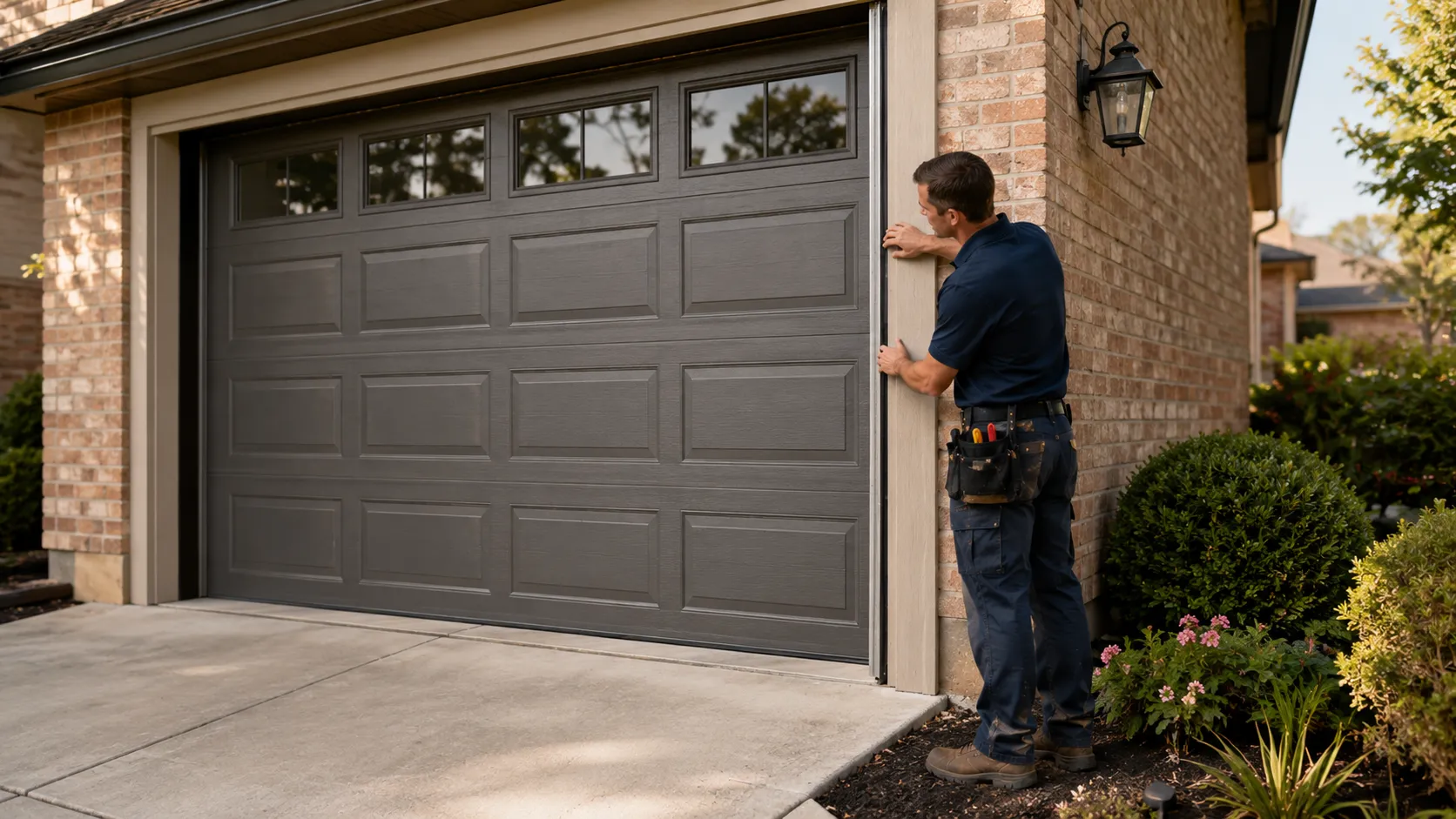
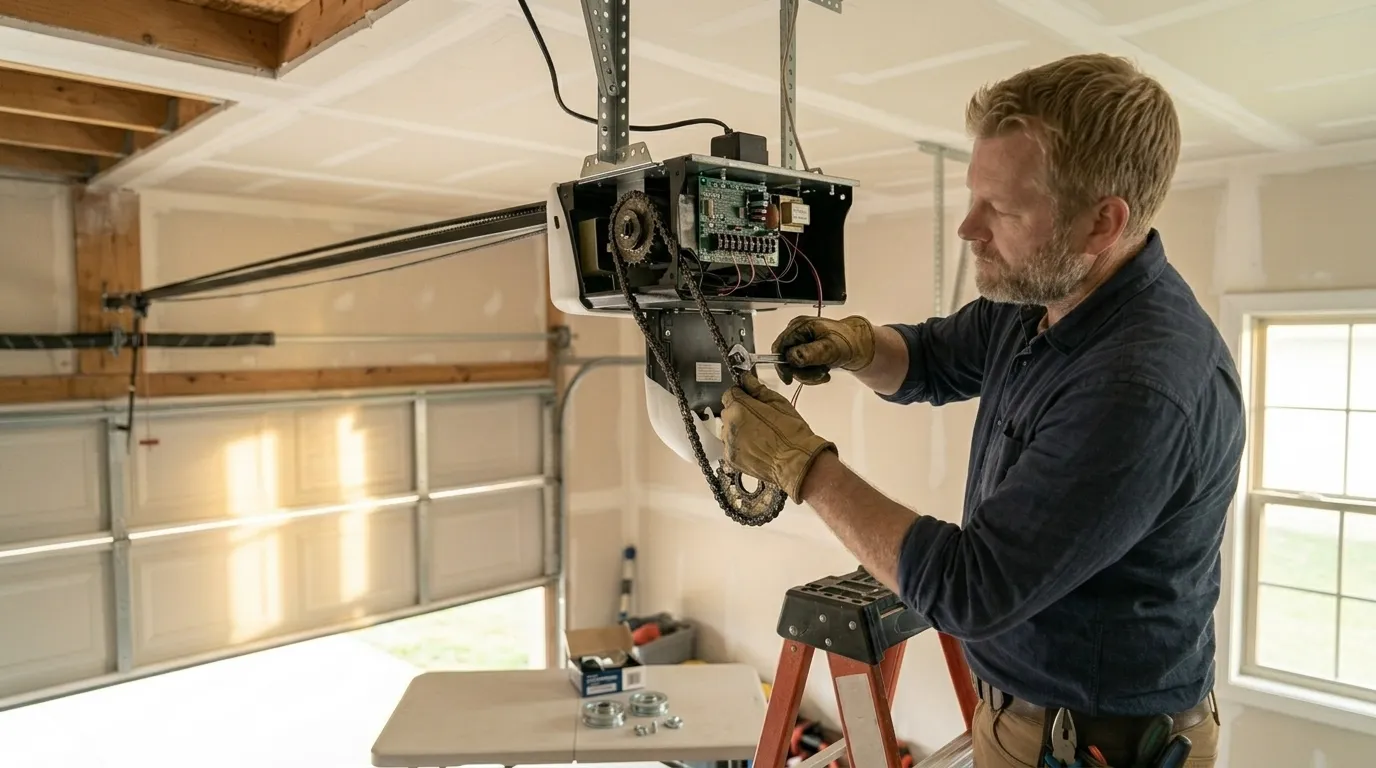
What It Costs
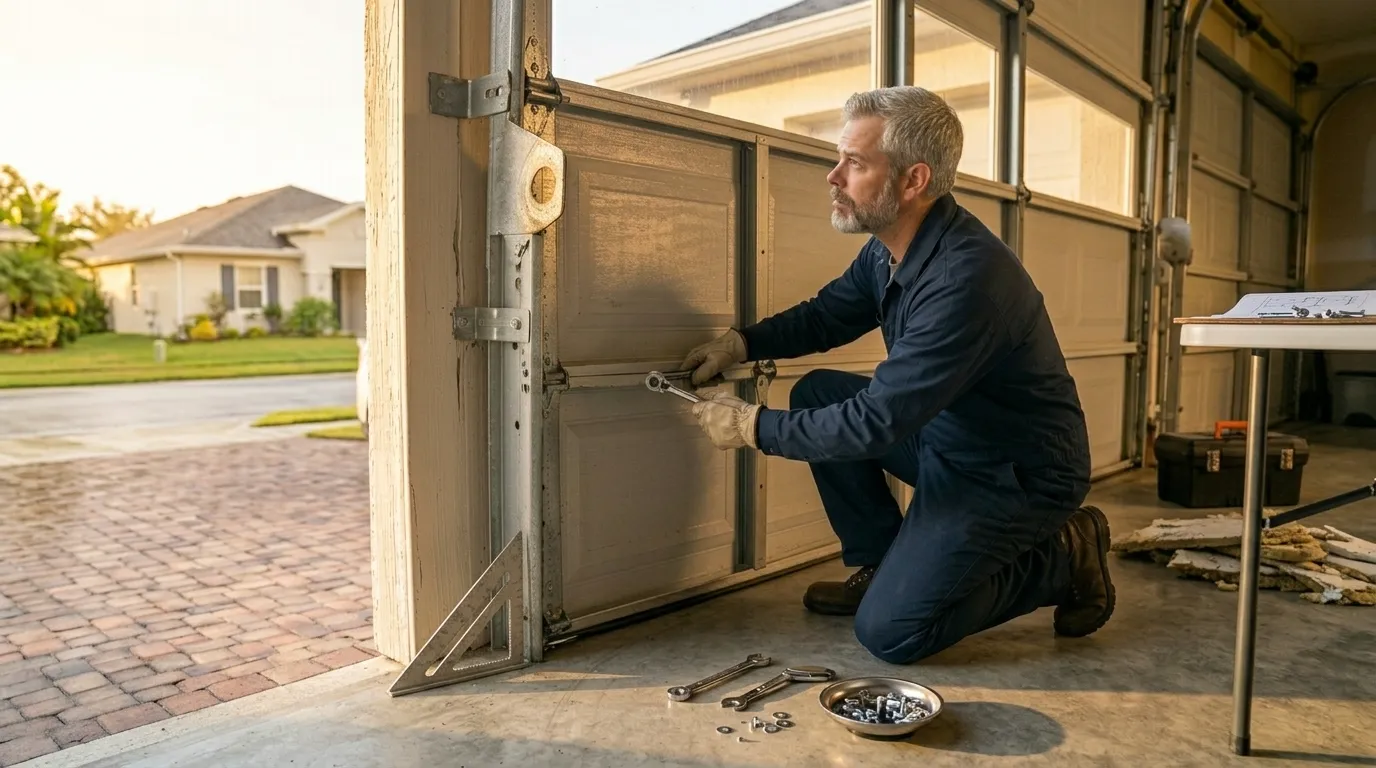
We're not going to throw a number at you that doesn't hold up once we're standing in front of your door. Cable repair pricing depends on whether one cable snapped or both, whether the drum or track took damage on the way down, and whether the door is a standard single or a heavier double panel. What we can tell you is what drives the range: cable length and gauge for your door size, whether the spring system needs to be reset at the same time (it usually does, since a cable failure often means the door slammed and threw the spring tension off), and how much of the hardware around the drum shows wear from age.
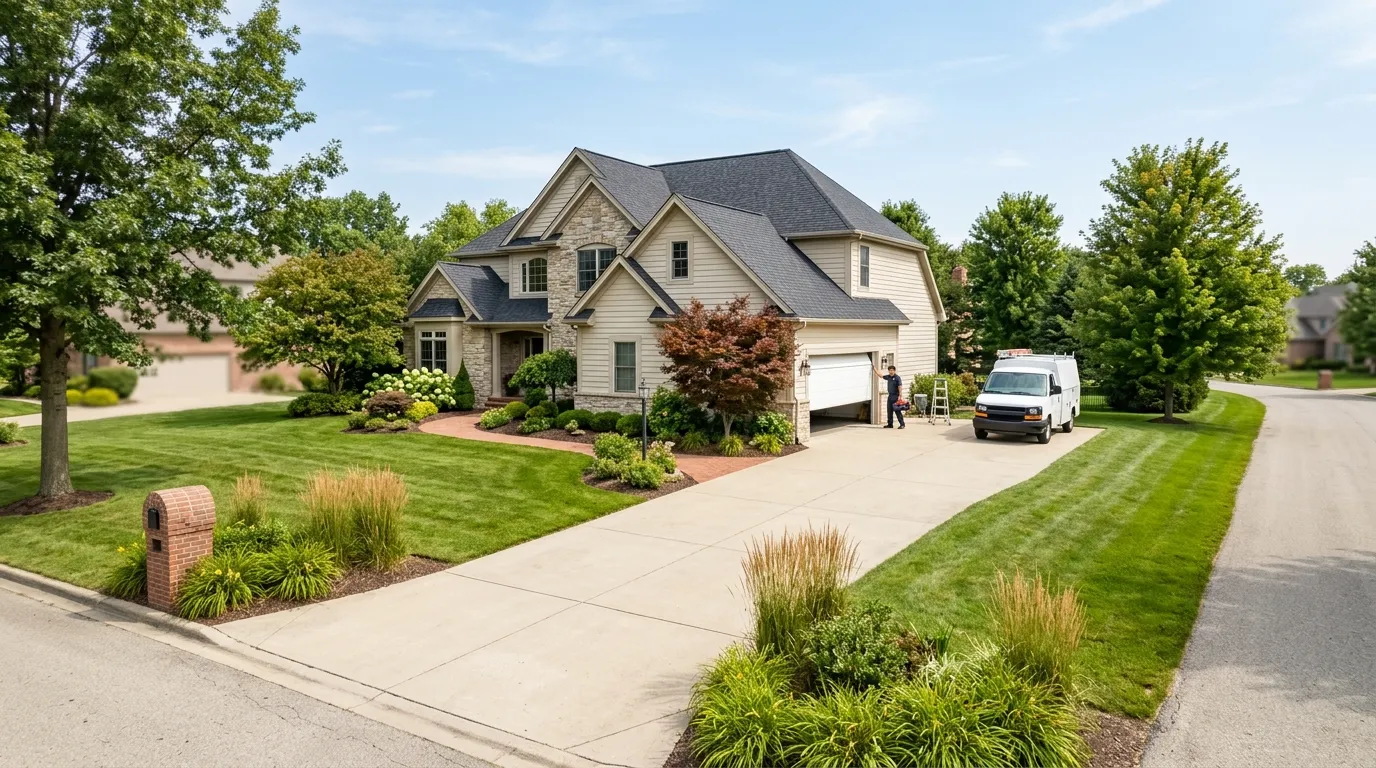
A lot of the doors we get called out to across this service area went up sometime between 1938 and 2003, with a big share from the 1980s and 90s. That range matters because the original cable and drum assemblies on those doors are decades old in a lot of cases, even if the opener's been swapped since. We give you a firm number once we've looked at the actual hardware, not before. If you want a ballpark before we're on site, tell us the door size and roughly how old the house is - it gets us closer.
Why It Happens Here
Cable failure in this area comes down to two things stacking on top of each other: age of the housing stock and what winter does to metal and lubrication. With median construction around 1989 and a lot of homes dating back to 1938, a large share of the doors we service are original or close to it - meaning original cable, original drum, original everything unless a prior owner replaced the opener and stopped there.
The climate side is the accelerant. This is a cold, severe winter climate, and that means repeated freeze-thaw cycles on the cable's lubrication and on the drum bearing. Grease that's fine in summer stiffens up in a cold snap, the cable starts dragging instead of feeding smoothly off the drum, and a cable that drags eventually frays at the point of friction. We see this pattern most on doors that sat un-serviced through several winters in a row - not one bad storm, but the cumulative wear of a decade or two of cold mornings.
How It Shows Up
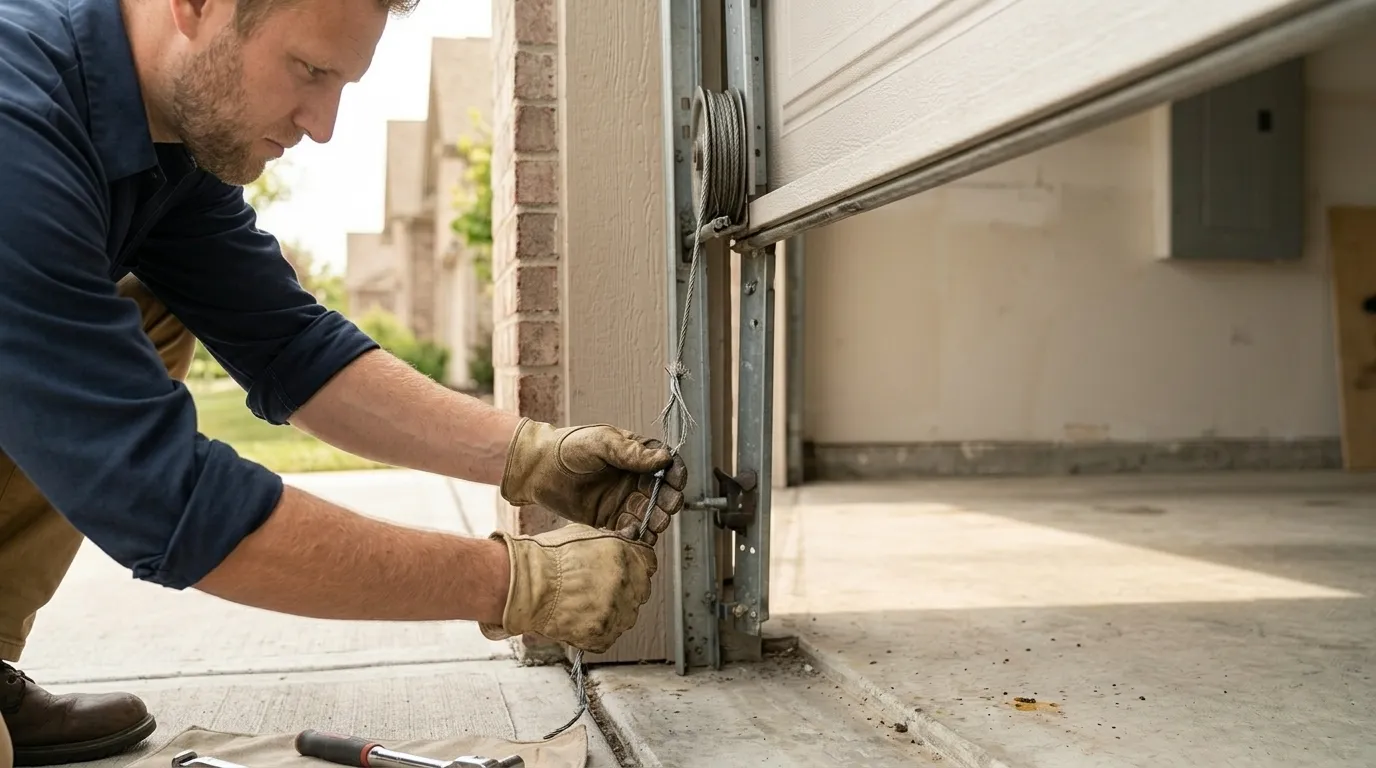
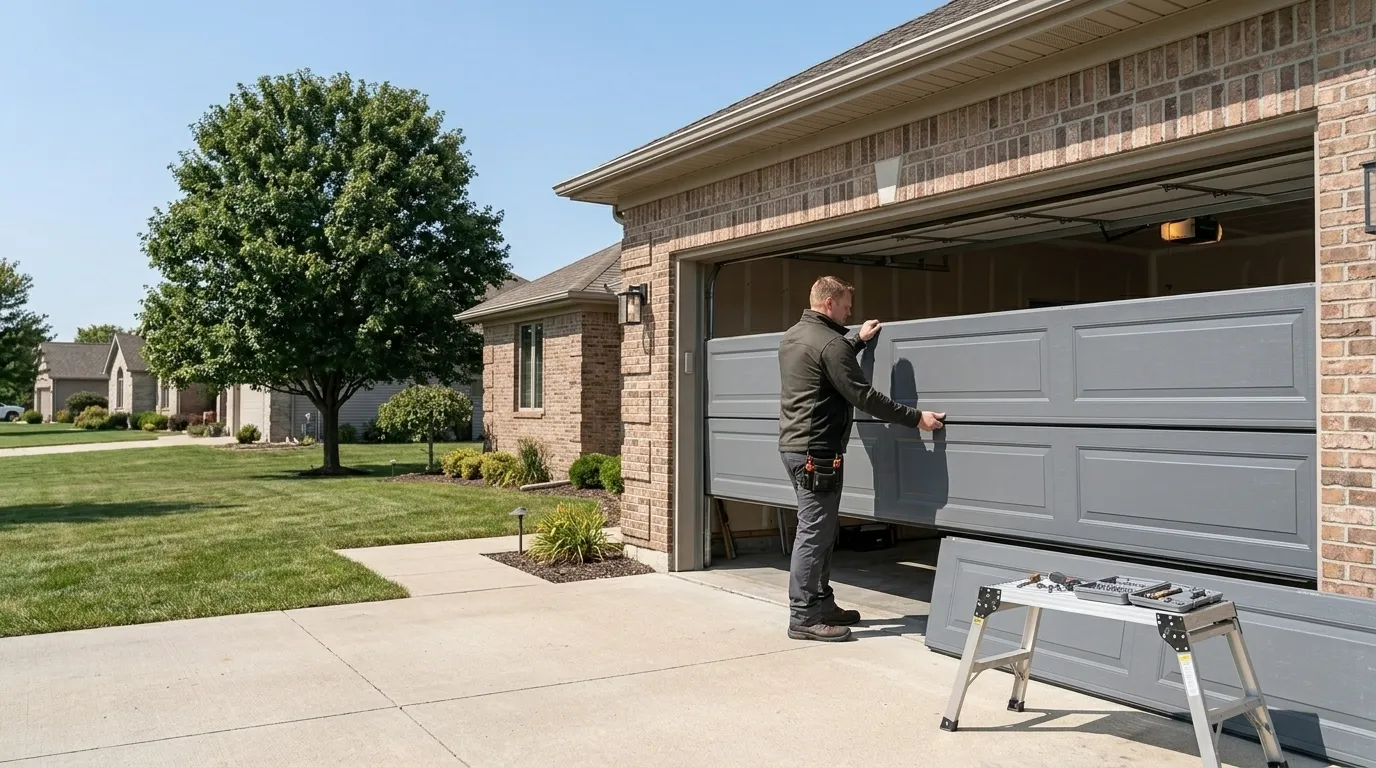
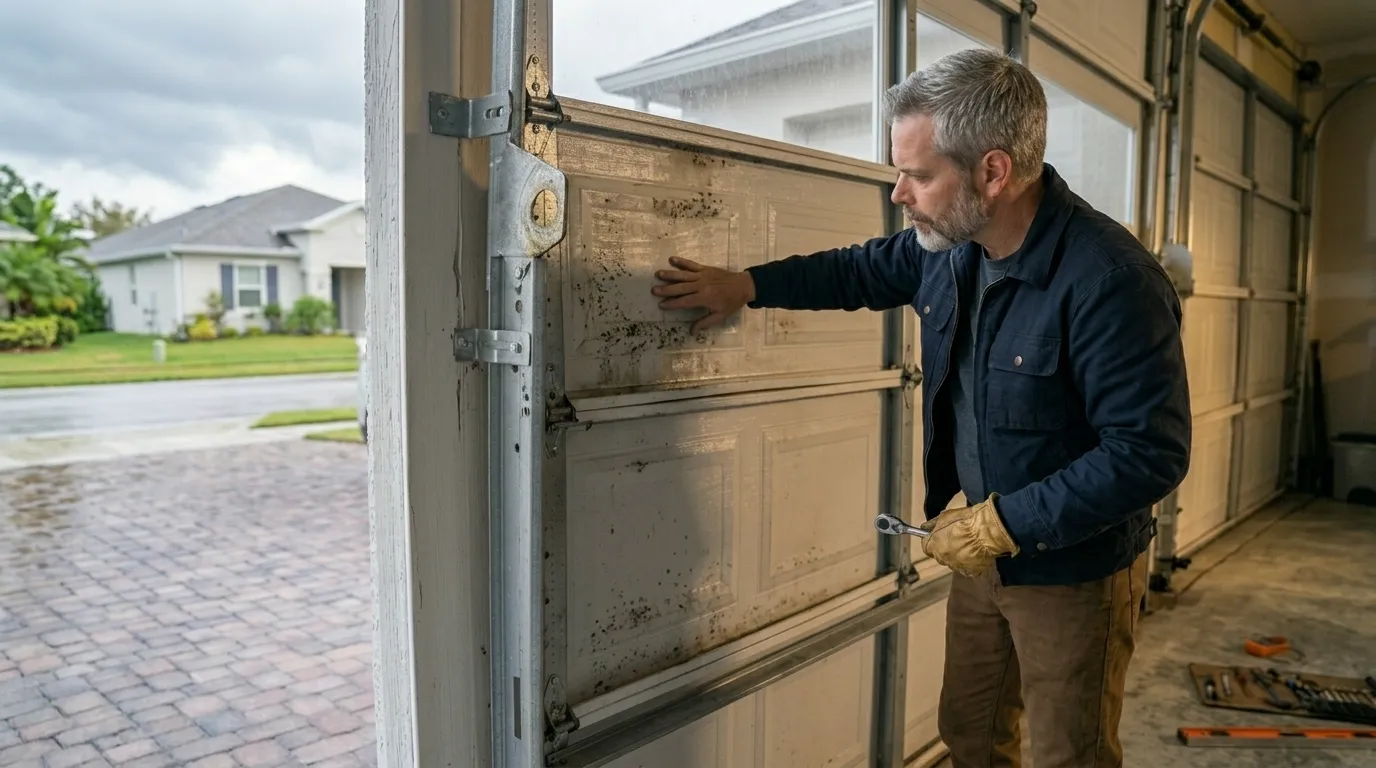
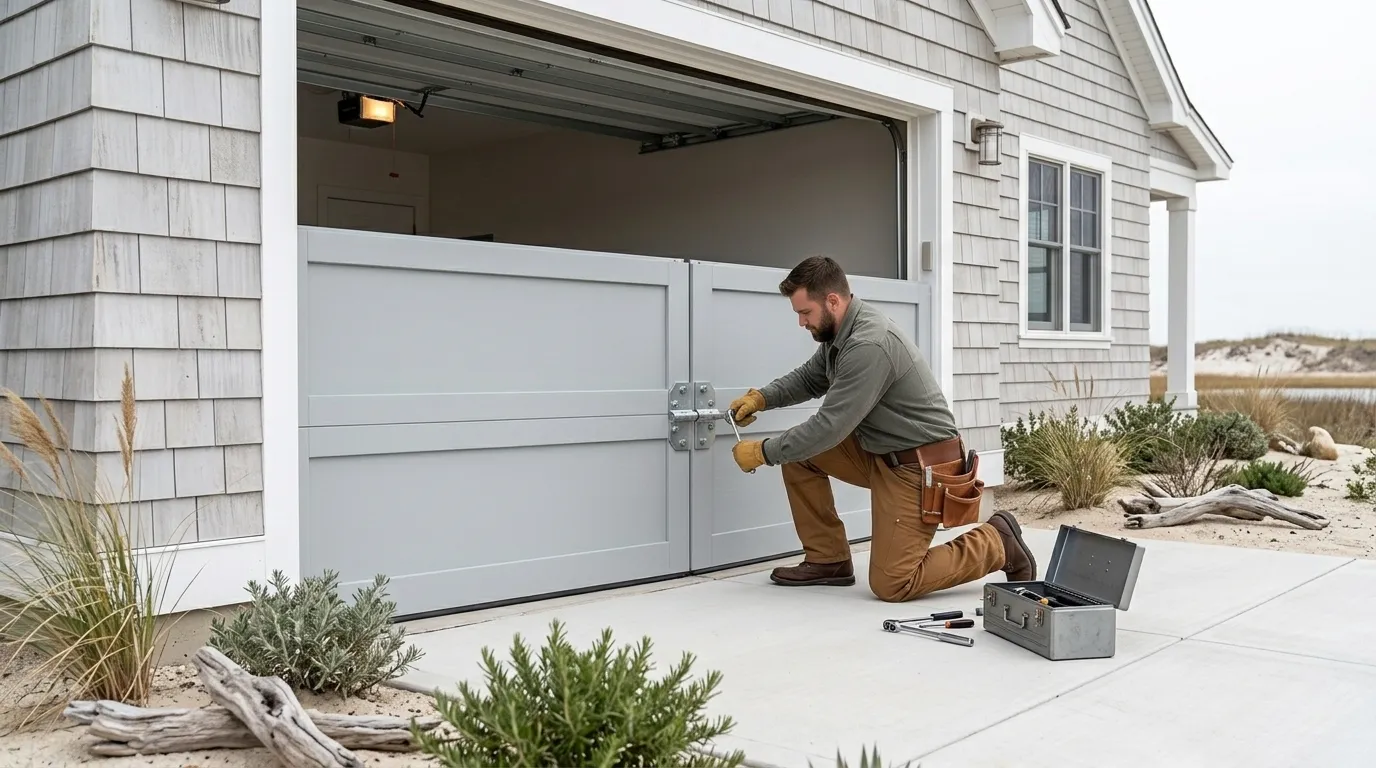
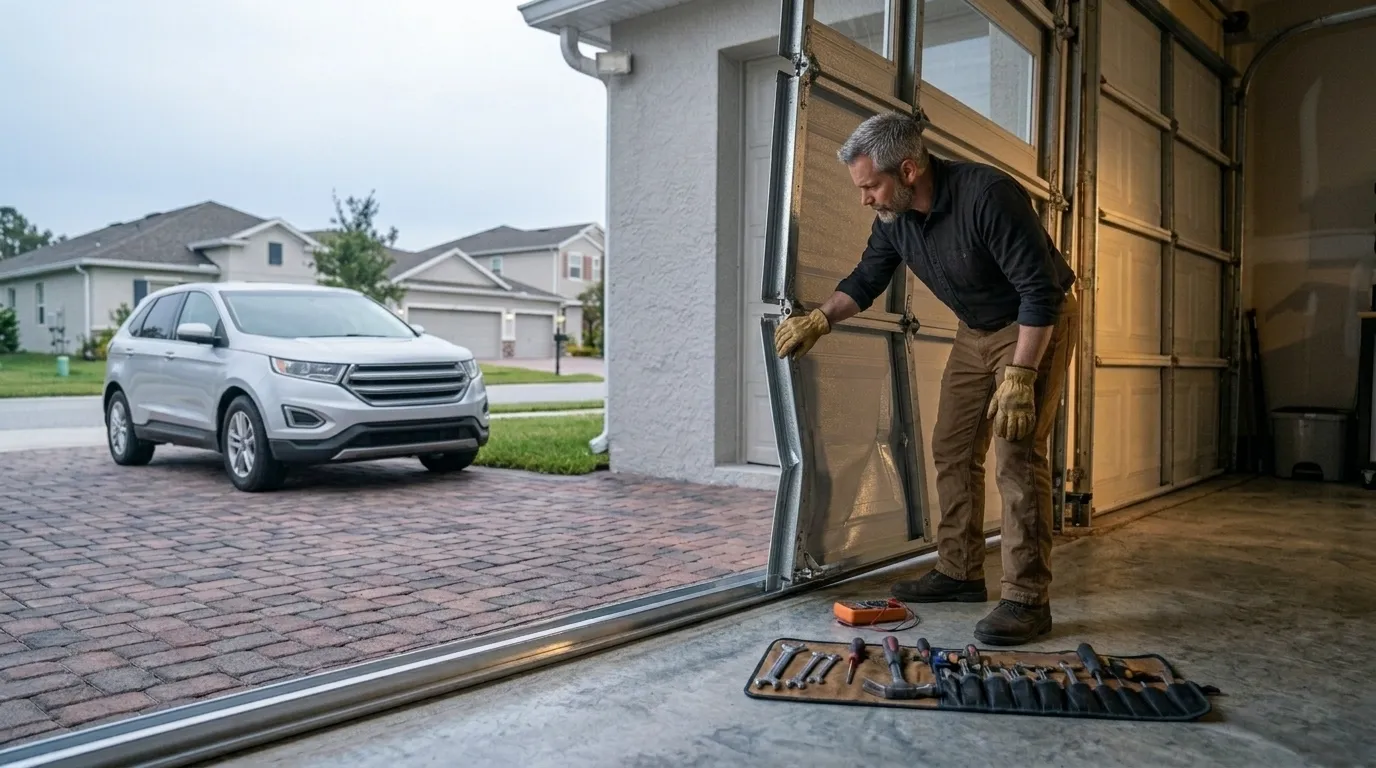
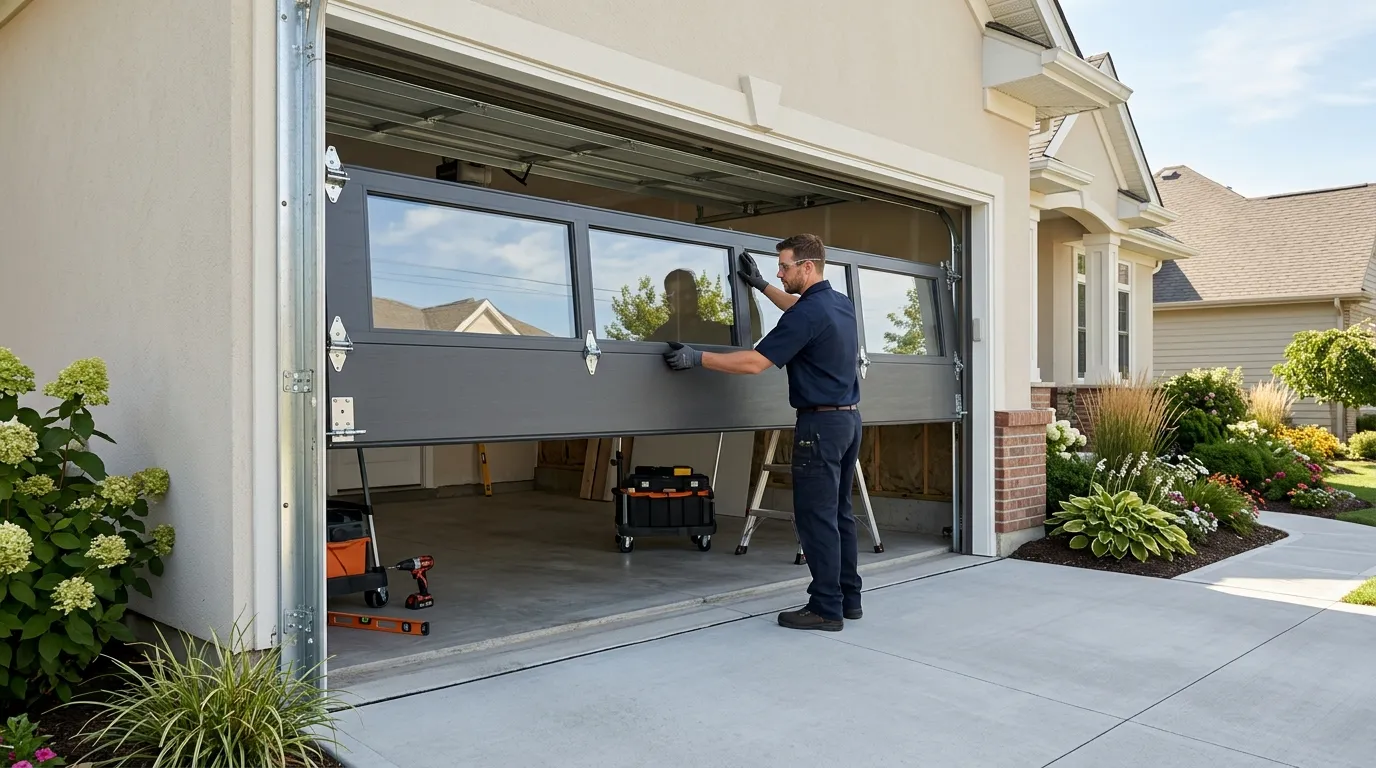
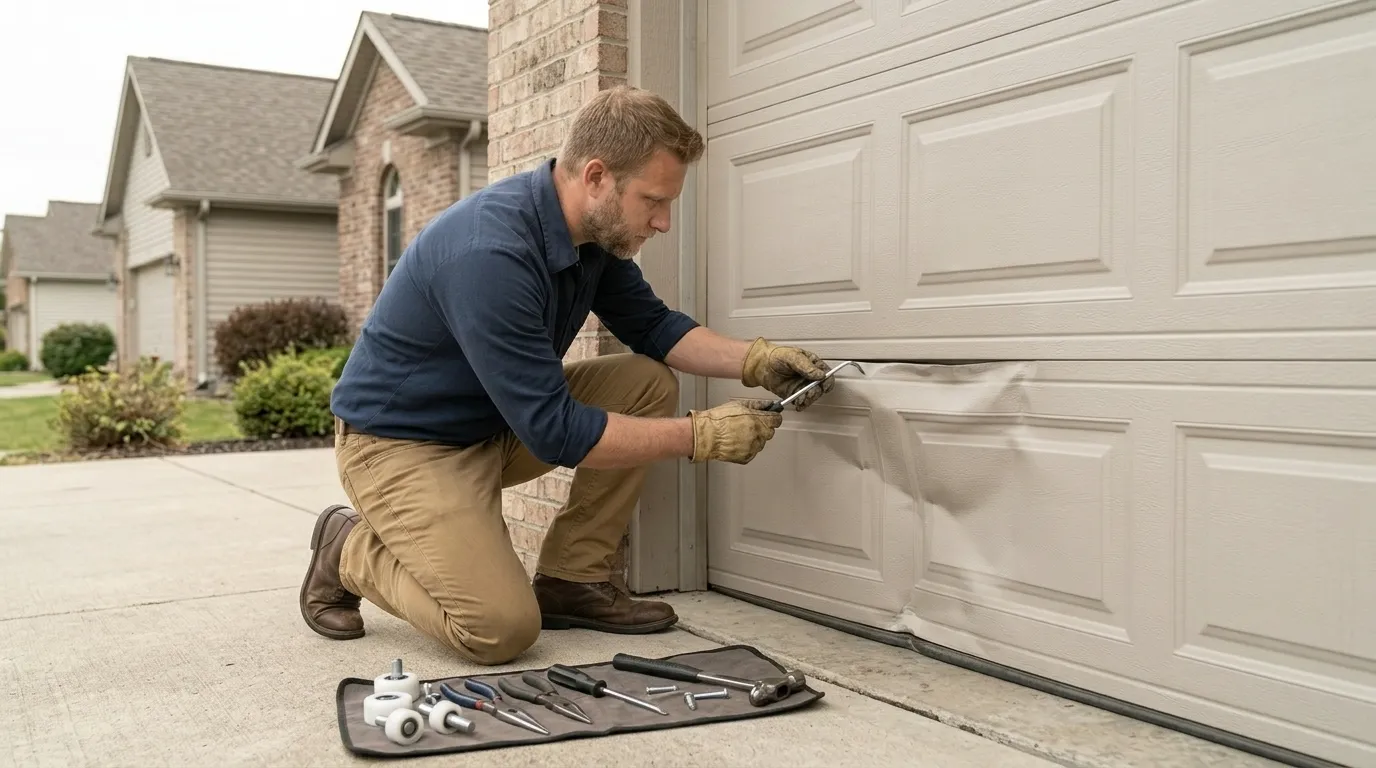
Most owners notice it one of two ways. Either the door stops halfway and won't go up or down smoothly - it hangs crooked, one side higher than the other, which usually means one cable has stretched or partially frayed while the other is still holding. Or it's sudden: a loud bang, the door drops fast, and one side of the panel is sitting on the cable that's now hanging loose instead of wound on the drum.
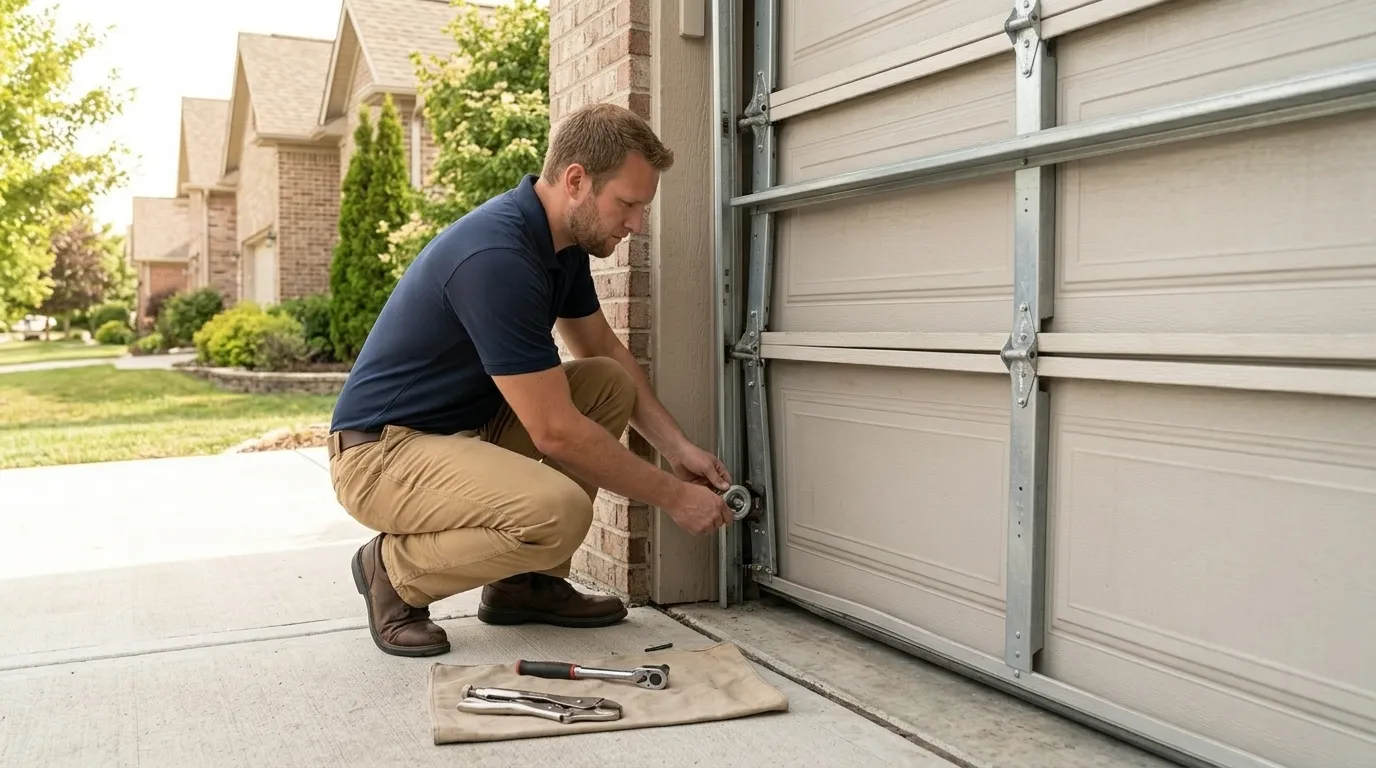
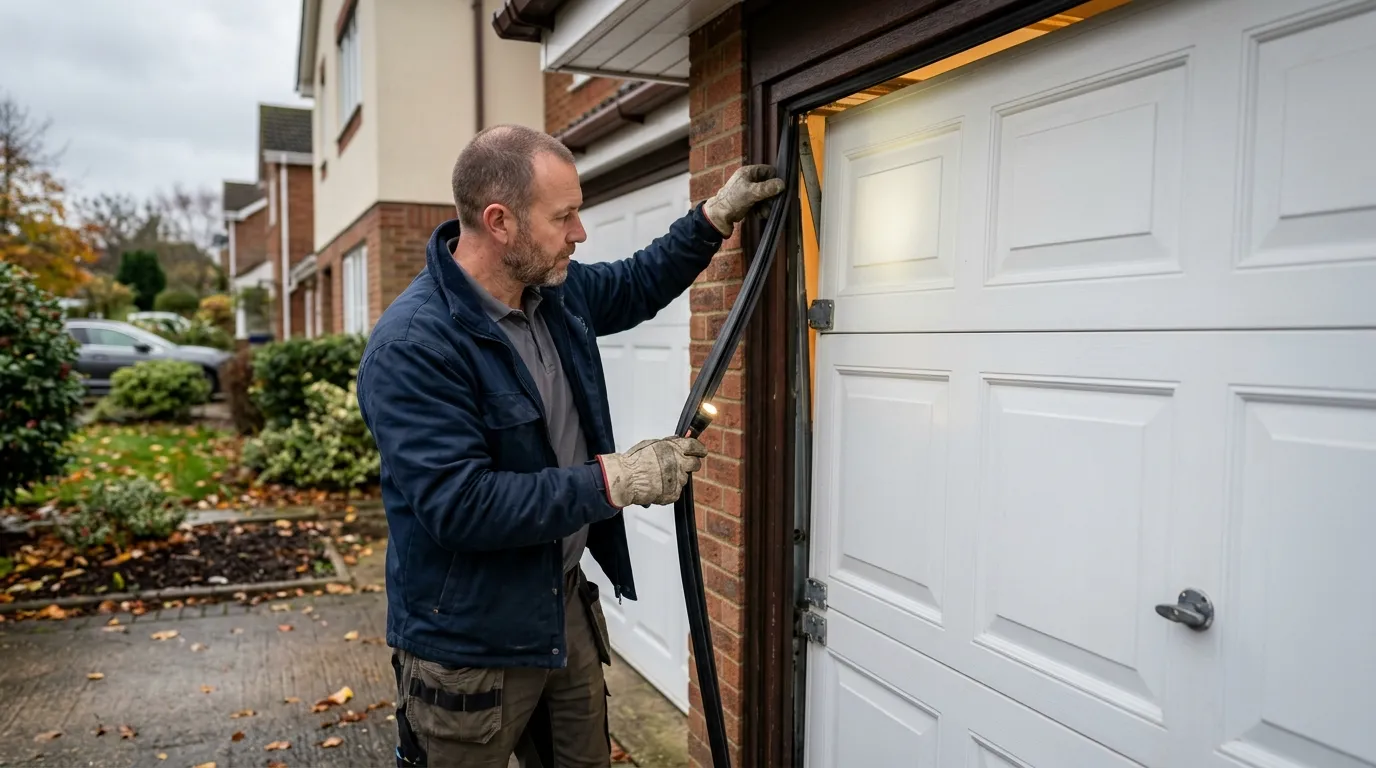
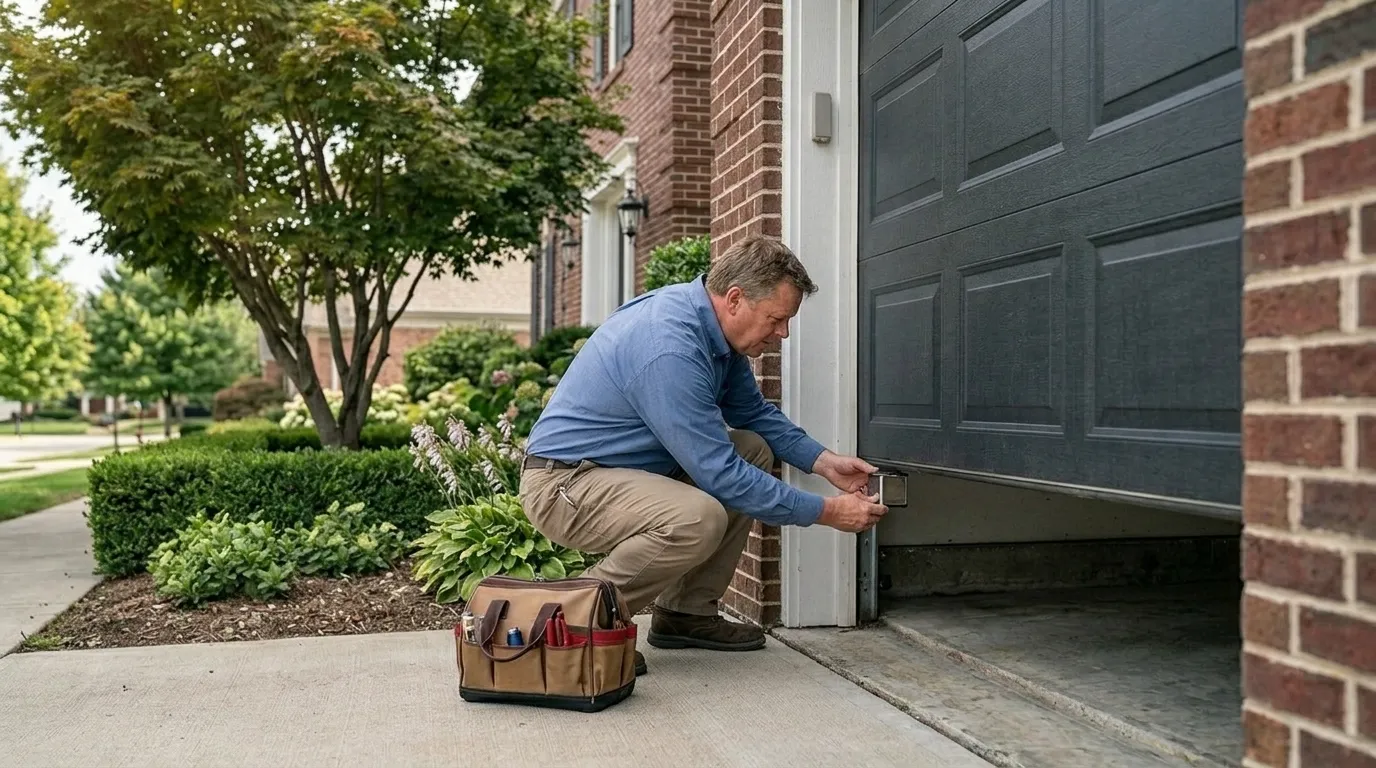
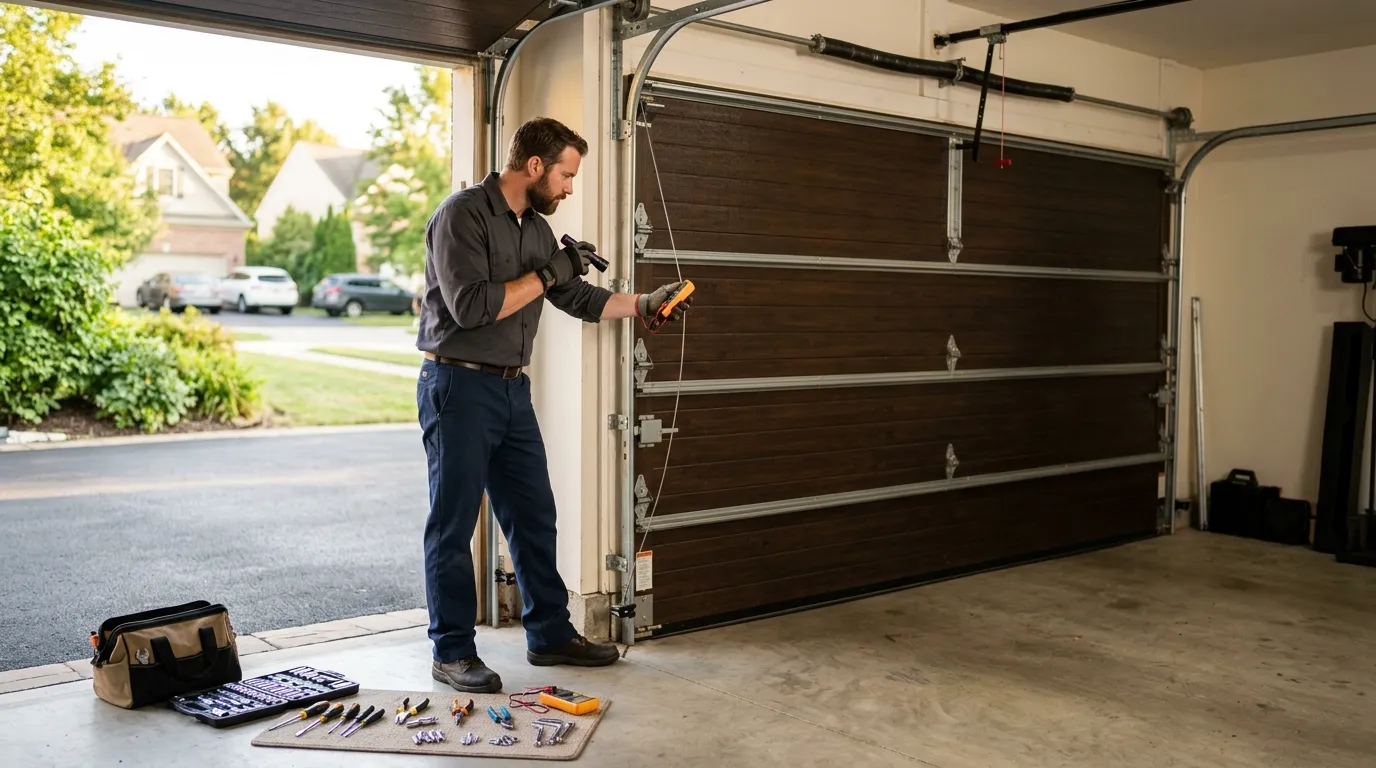
A slower warning sign is fraying you can actually see if you look up at the cable near the bottom bracket - small wire strands sticking out, rust starting at a bend point, or a cable that looks like it's kinked instead of running straight. If you catch it at that stage, it's a controlled repair. If you wait for the bang, you're often also looking at a bent track or a damaged bottom bracket from the drop, which turns a cable job into a bigger one. Either way, don't try to force the door up manually once a cable's gone - the opposite side is still under spring tension and can move unpredictably.