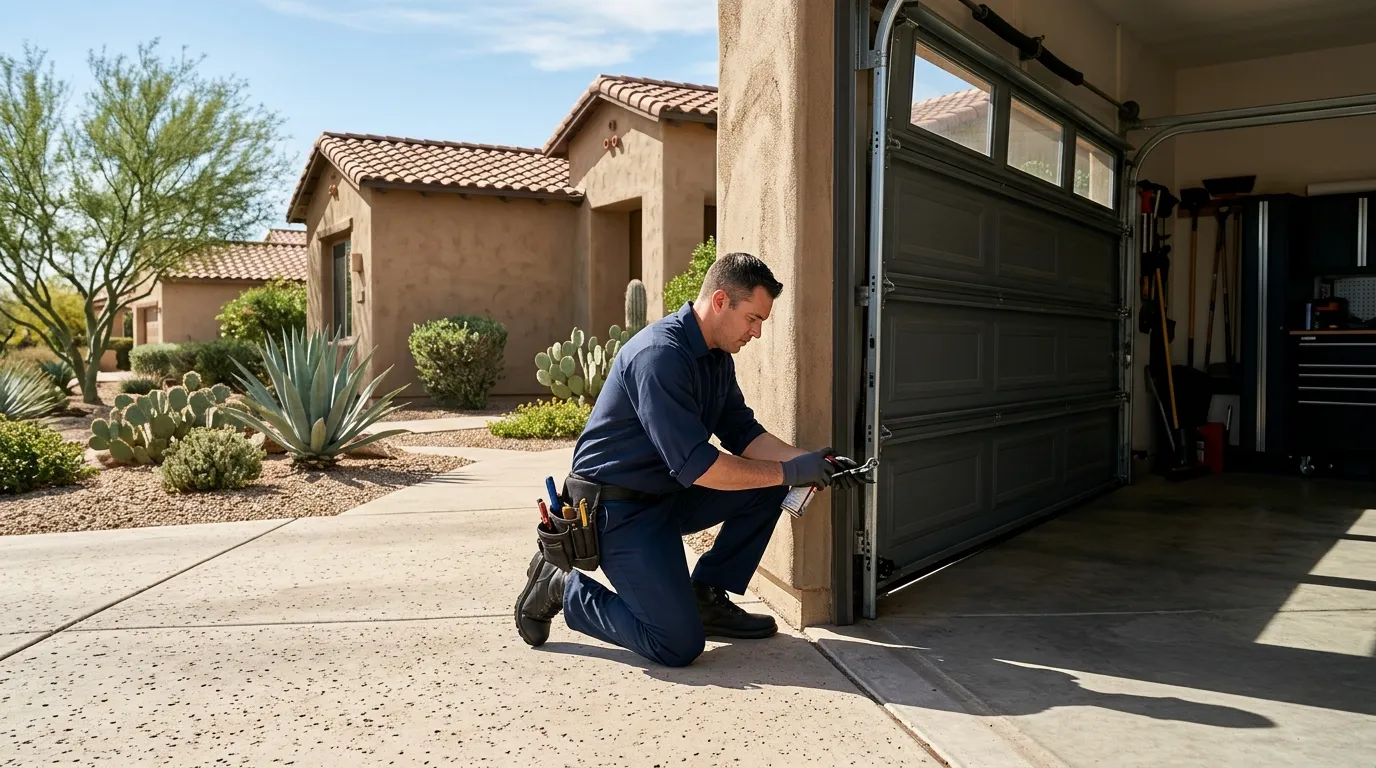
What It Costs
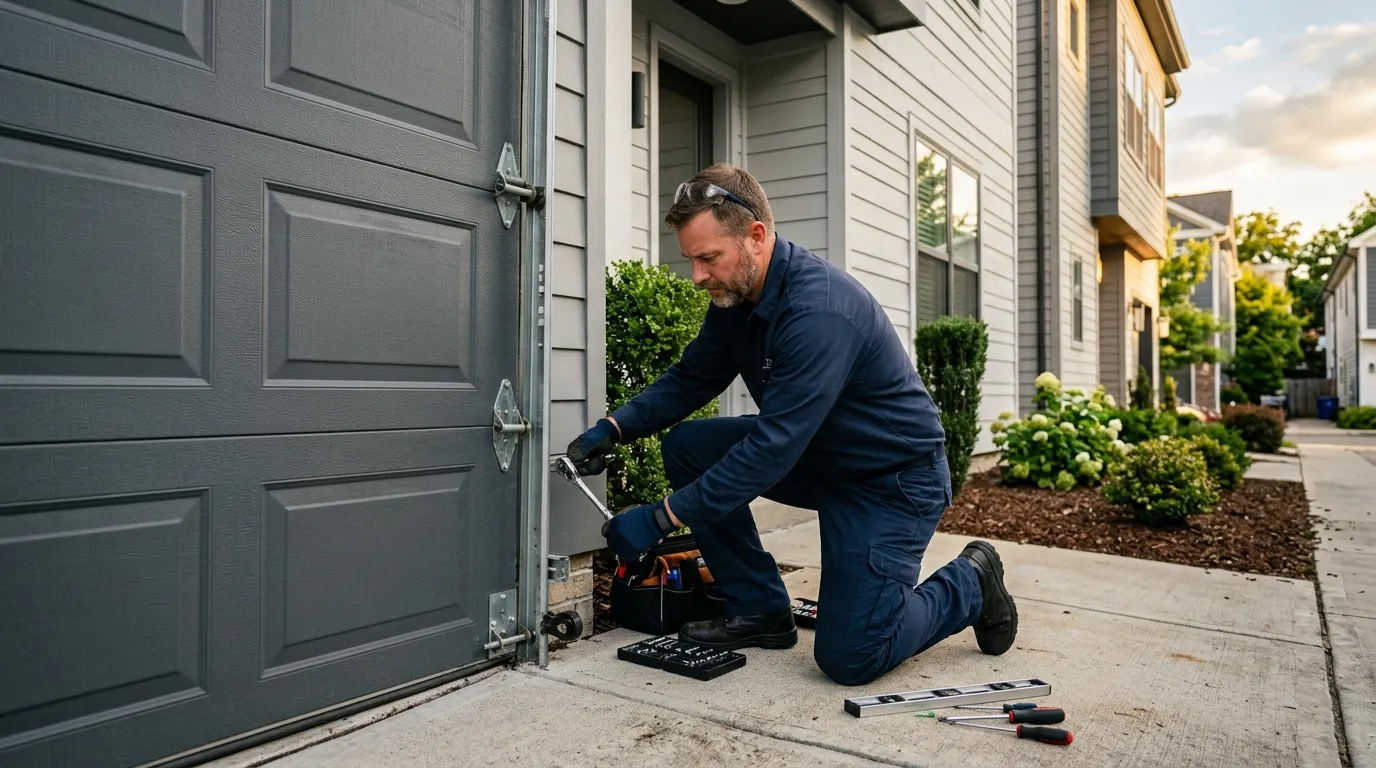
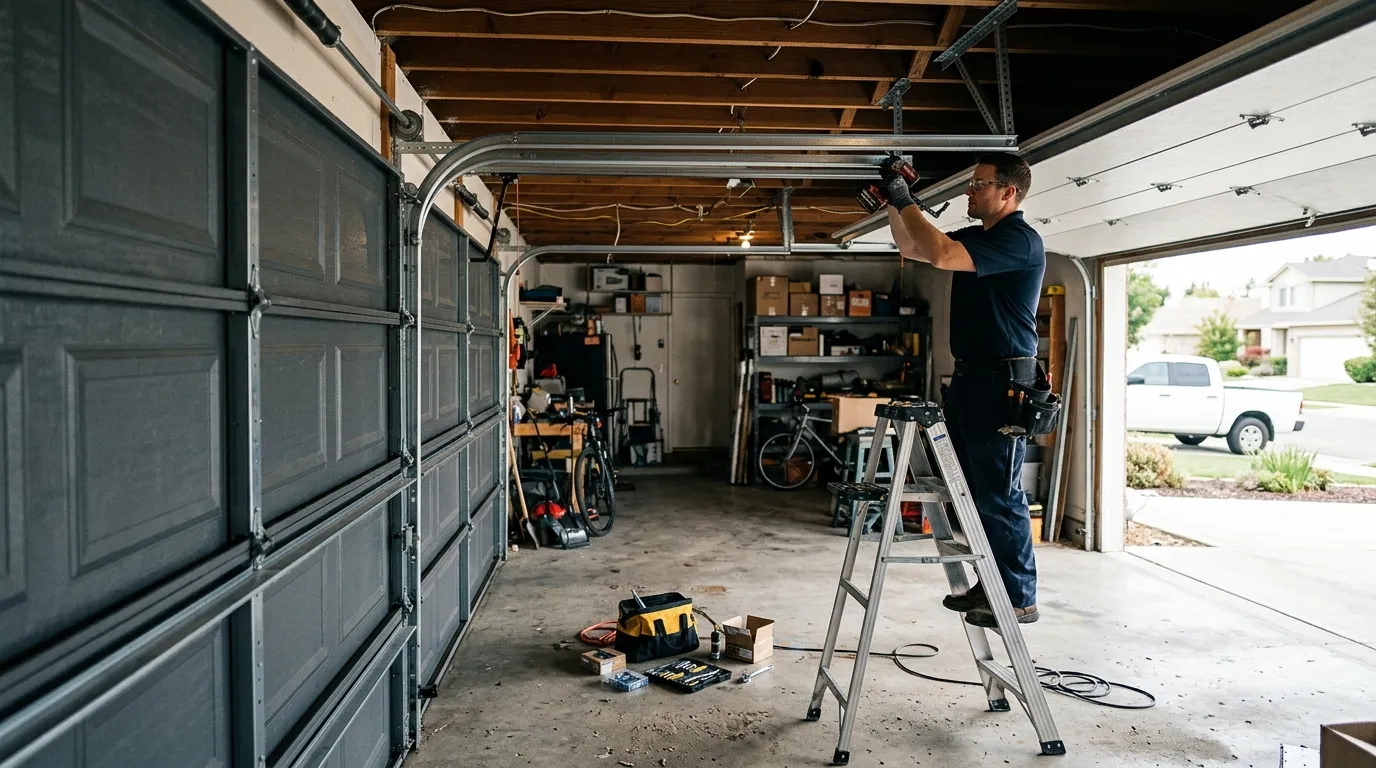
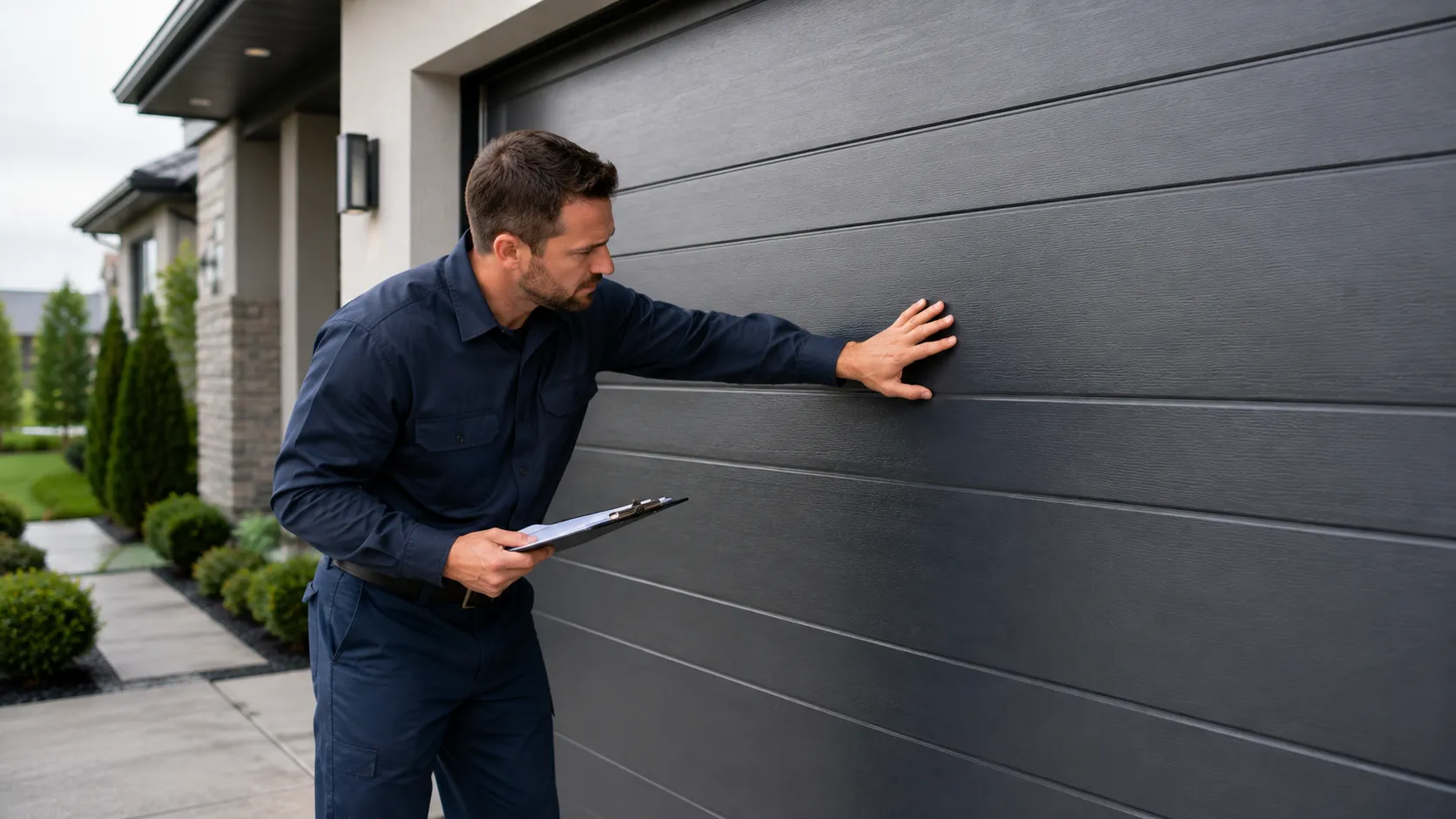
We don't post a flat number here because a tune-up on a ten-year-old opener isn't the same job as re-balancing a torsion spring on a door that's been running dry since the Clinton administration. What we can tell you is what drives the cost: how many springs the door has, whether the rollers are steel or nylon, and how long since anyone lubed the track. In a service area where the median home was built in 1989, a lot of doors are original hardware that's simply worn past the point where oil alone fixes it. If a tech gets under your door and finds a cable fraying or a bearing plate cracked, that's a different conversation than the one you called about, and we'll tell you before we touch it, not after. Ask for the visit fee and the maintenance-plan rate when you call - those are the numbers we'll give straight, because they don't depend on what's inside your specific door.
The honest limitation: we don't guess prices over the phone for anything beyond a basic tune-up, because guessing wrong either loses your trust or loses us money, and neither helps you.
Why It Happens Here
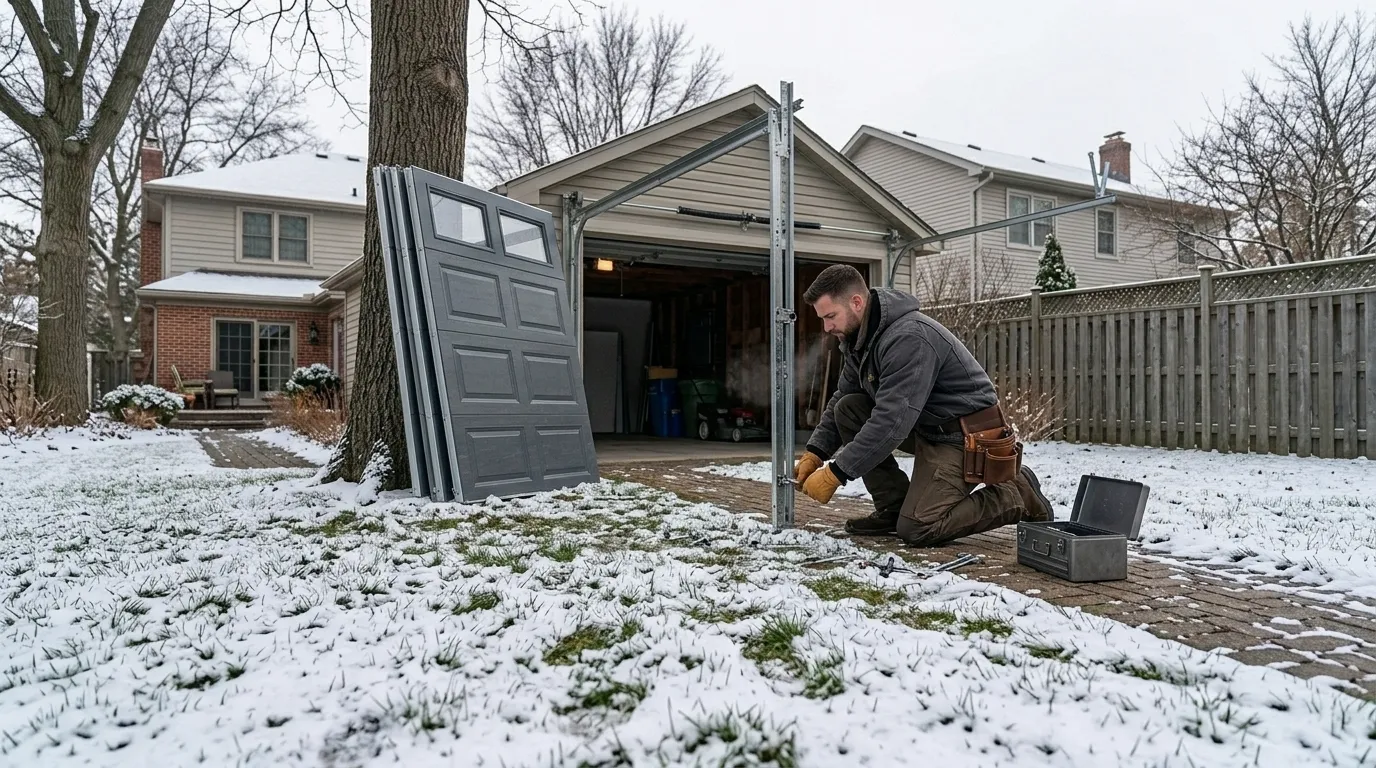
Reno sits in a cold, severe climate band, and that matters more for garage doors than most owners expect. Steel contracts in a hard freeze, which tightens tolerances on tracks and hinges that were adjusted for warmer weather. Lubricant that's fine in summer gets stiff overnight in winter, so a roller that turned smoothly in July can bind and chatter in January. That cycle - contract, bind, wear, repeat - is harder on a door than steady heat or steady cold ever is.
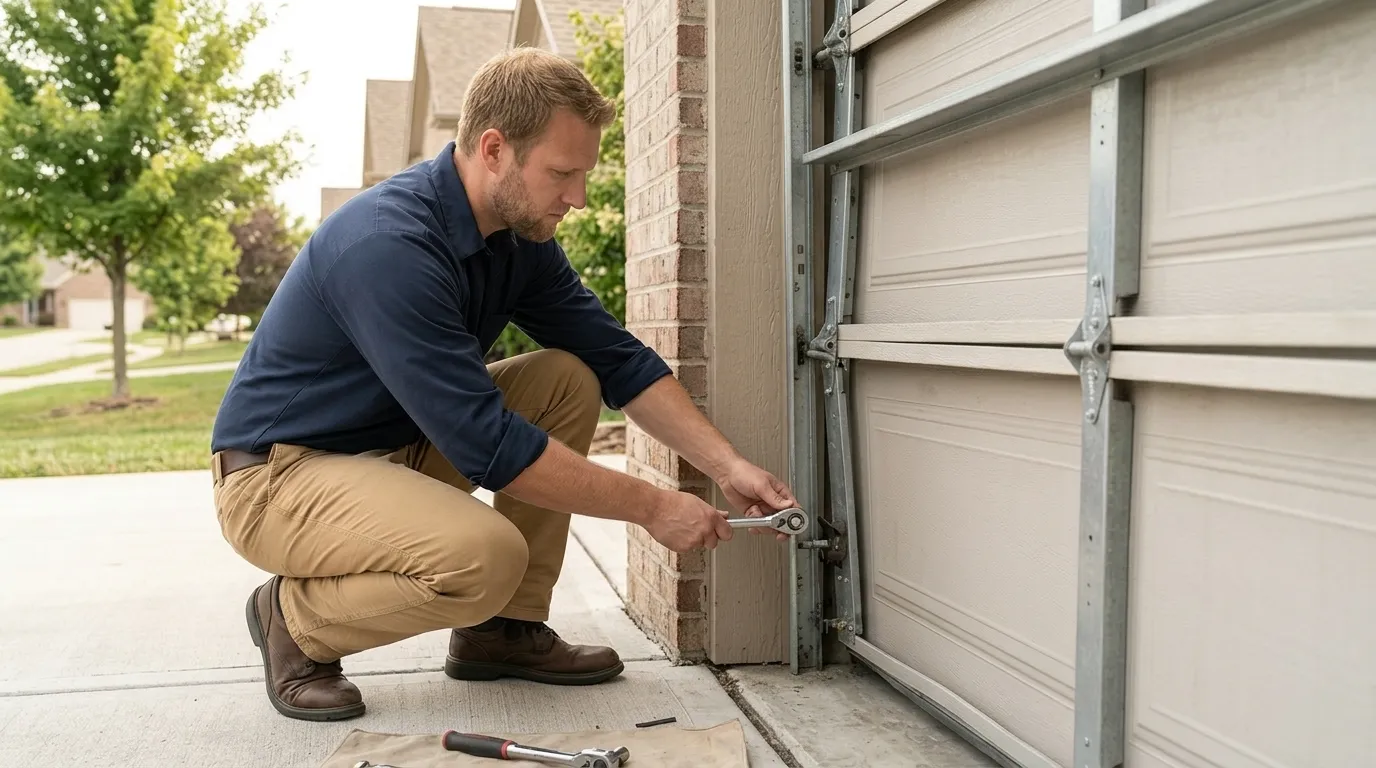
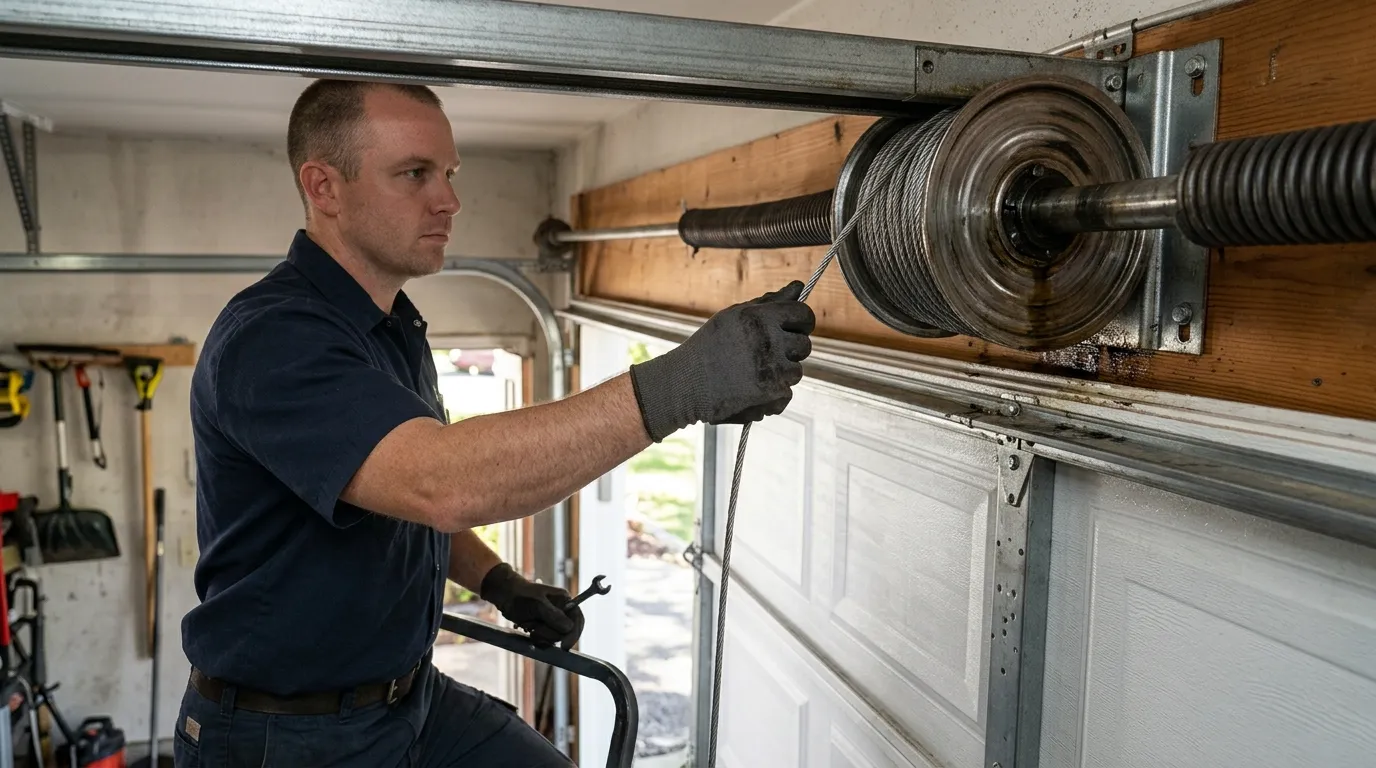
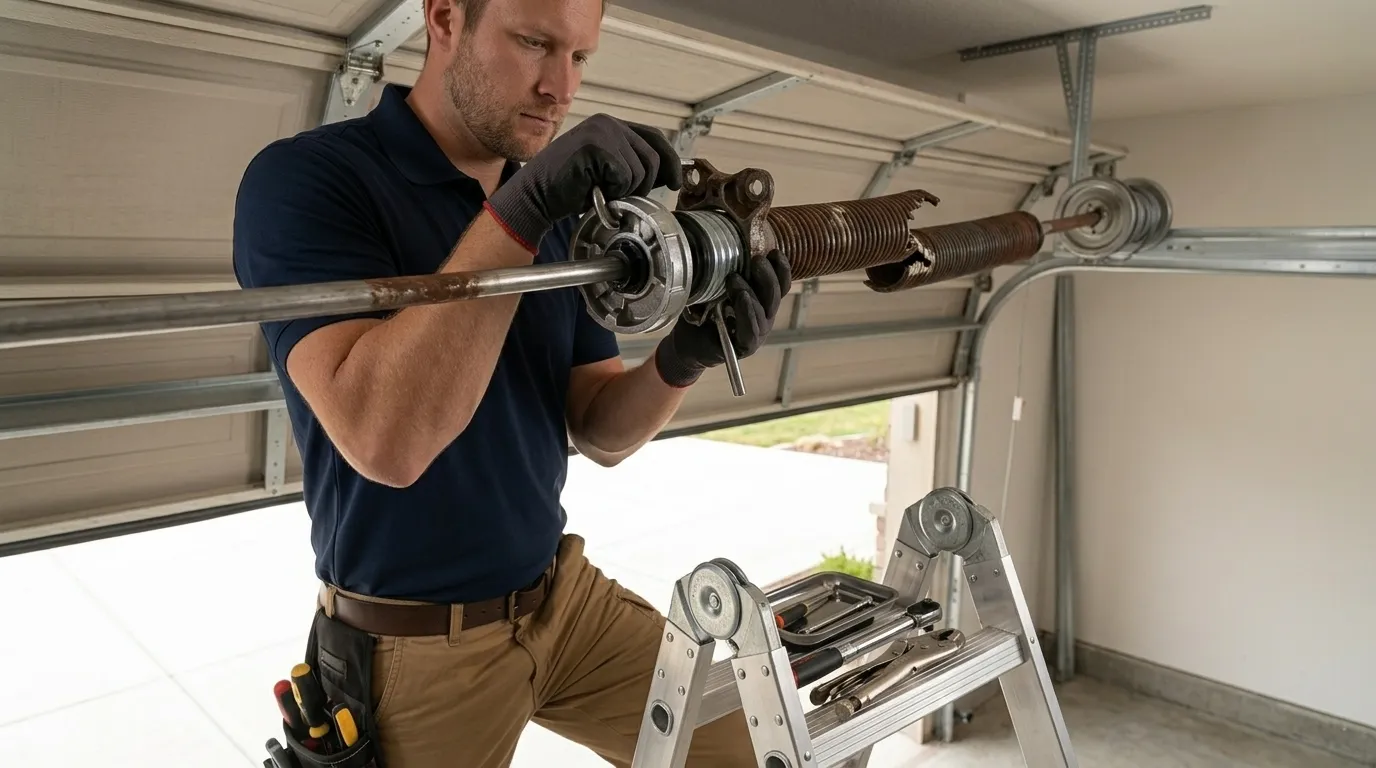
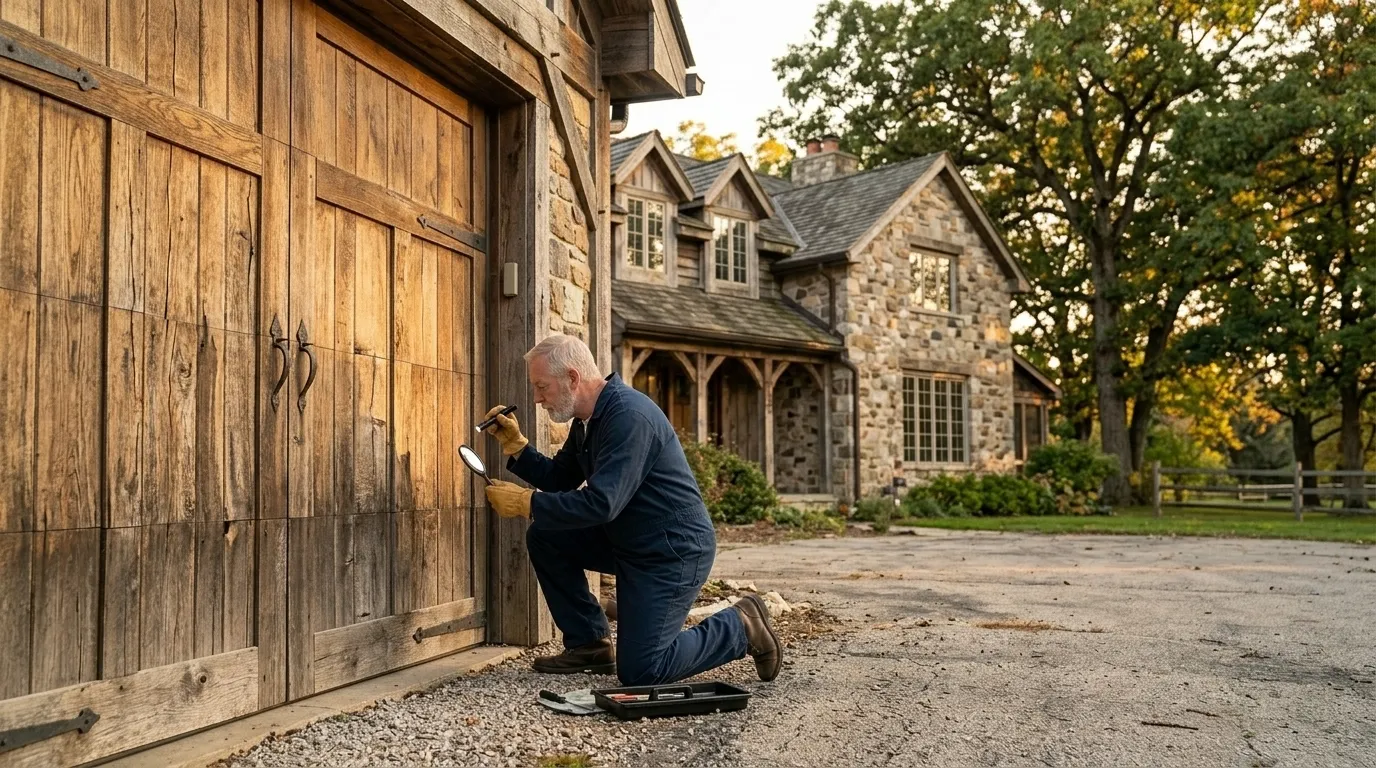
Age compounds it. With housing across the service area running from 1938 to 2003 and a median build year of 1989, a large share of doors out here are old enough that their springs and cables have already been through two or three decades of that seasonal swing. A torsion spring rated for a certain number of cycles doesn't care how gently you treat it - cold-weather stress just uses those cycles up faster. That's the mechanical reason maintenance schedules matter more here than in a mild climate: you're not just checking for wear, you're checking for wear that happens on an accelerated clock.
How It Shows Up
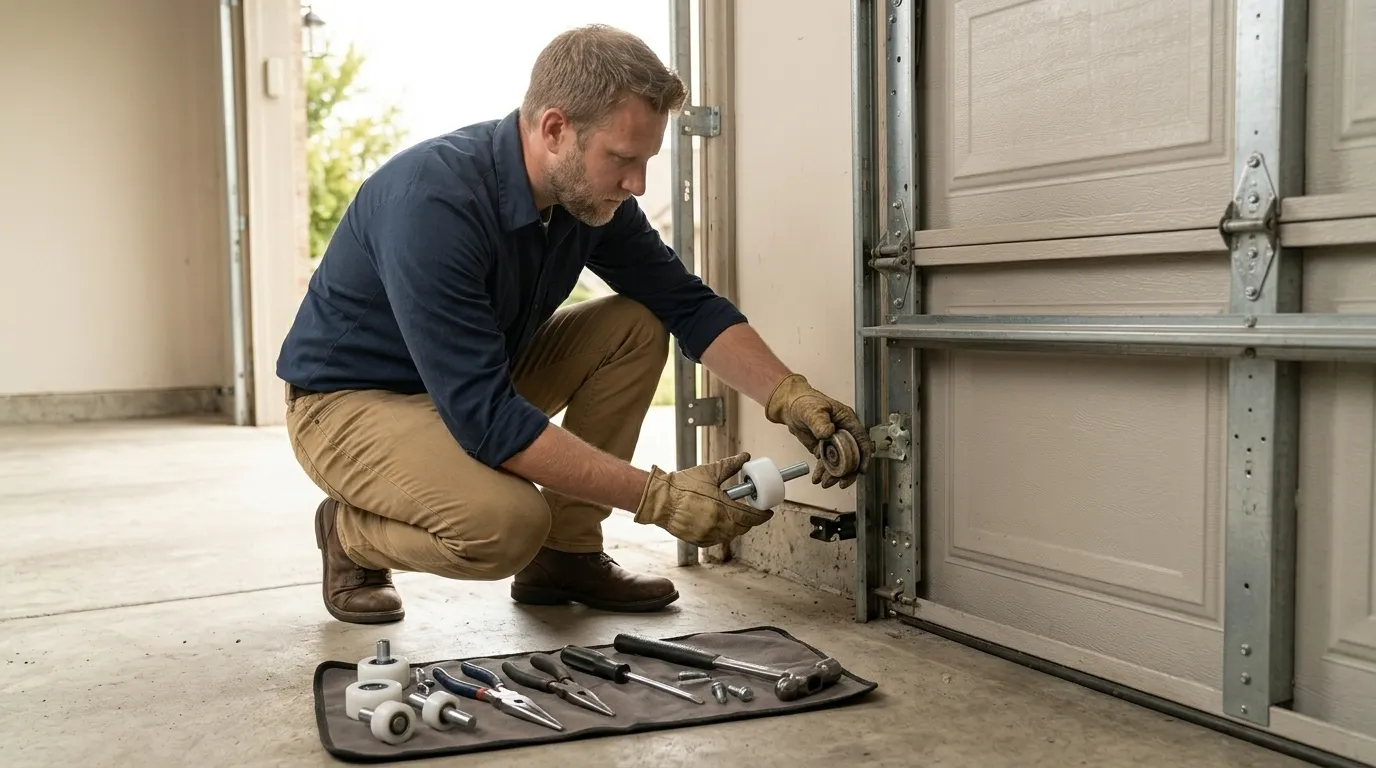
The early signs are small. A door that used to open in one smooth motion starts pausing partway, or the opener strains for a second before it catches. You'll hear it before you feel it - a grinding pop from a spring under uneven tension, or a metallic scrape from a roller riding dry in its track. In the areas closest in, like we see a lot of these original-era doors still running their factory hardware, just louder each winter than the one before.
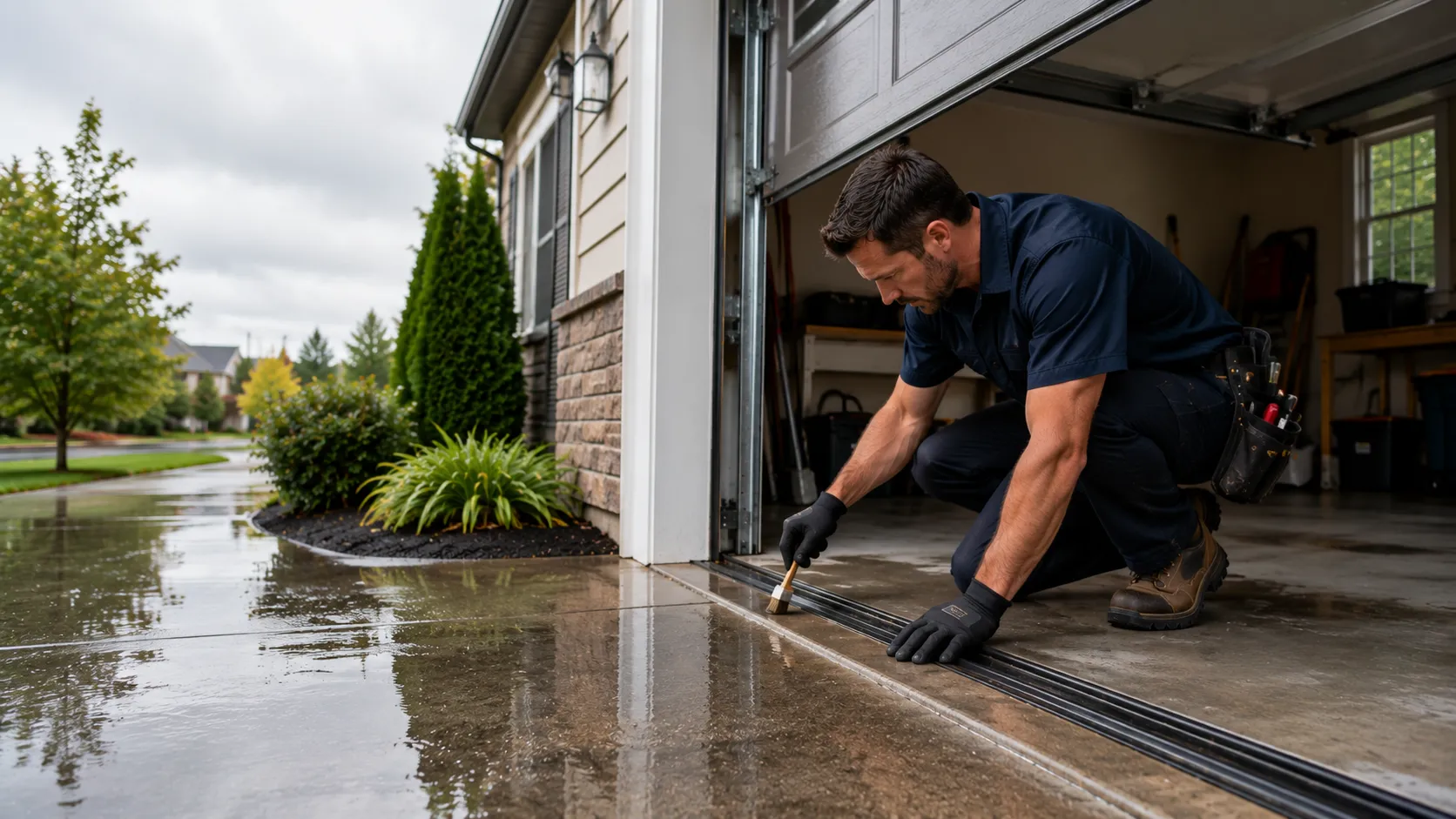
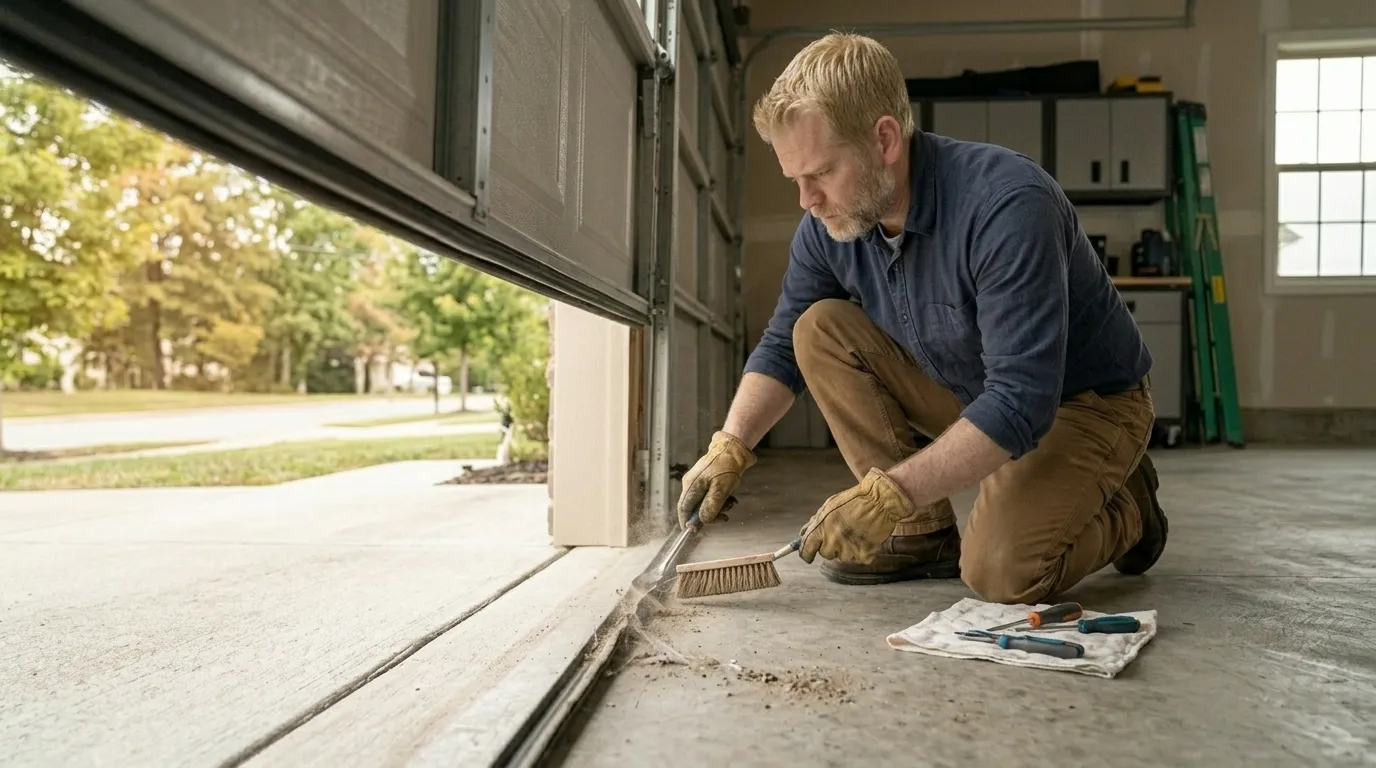
Further out, in places like Verdi or Cold Springs where the swing between night and day temperature is sharper, the contraction-and-bind cycle shows up faster - sometimes as a door that won't fully seal at the bottom, letting cold air in along the threshold. None of these are emergencies by themselves. They're the door telling you it's due for a look before a spring snaps under load or a cable frays through, which is the point where a maintenance call turns into a repair call.