Why It Happens Here
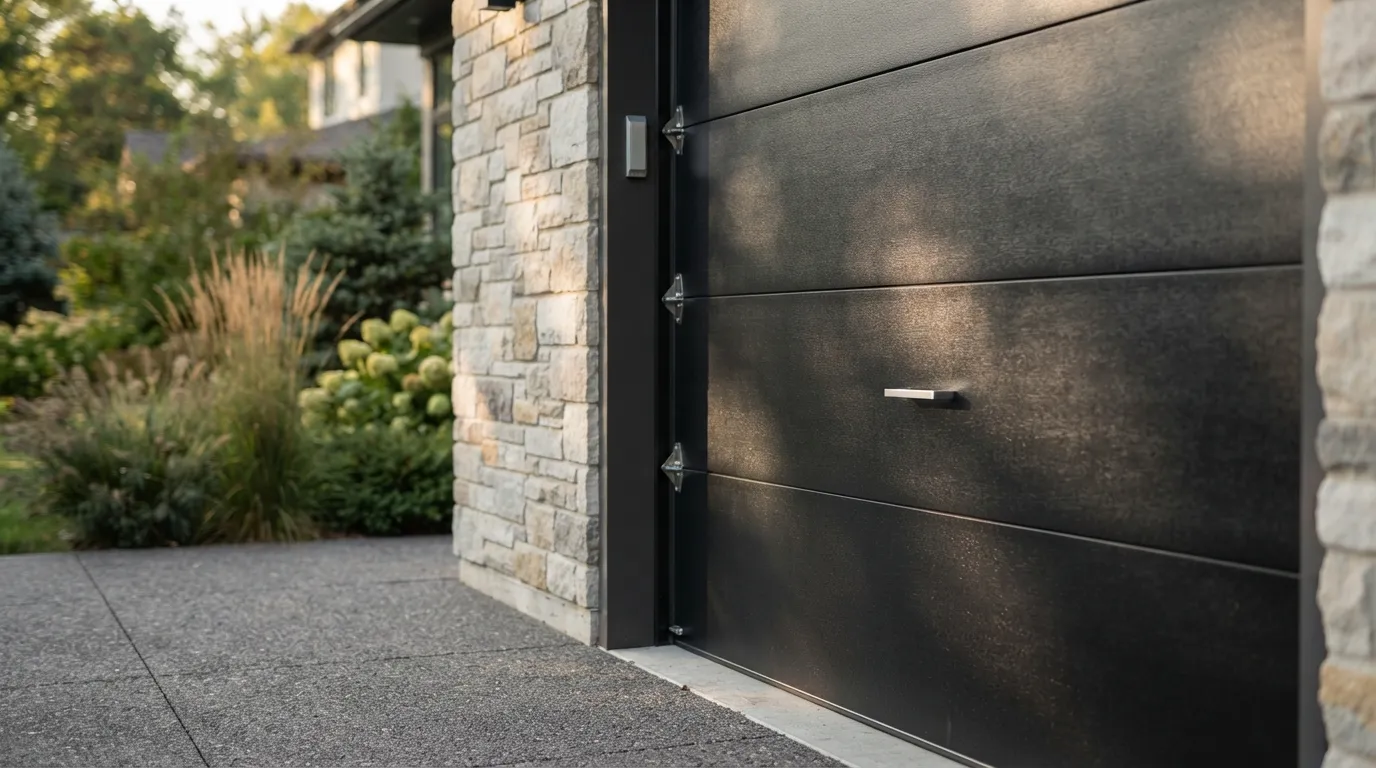
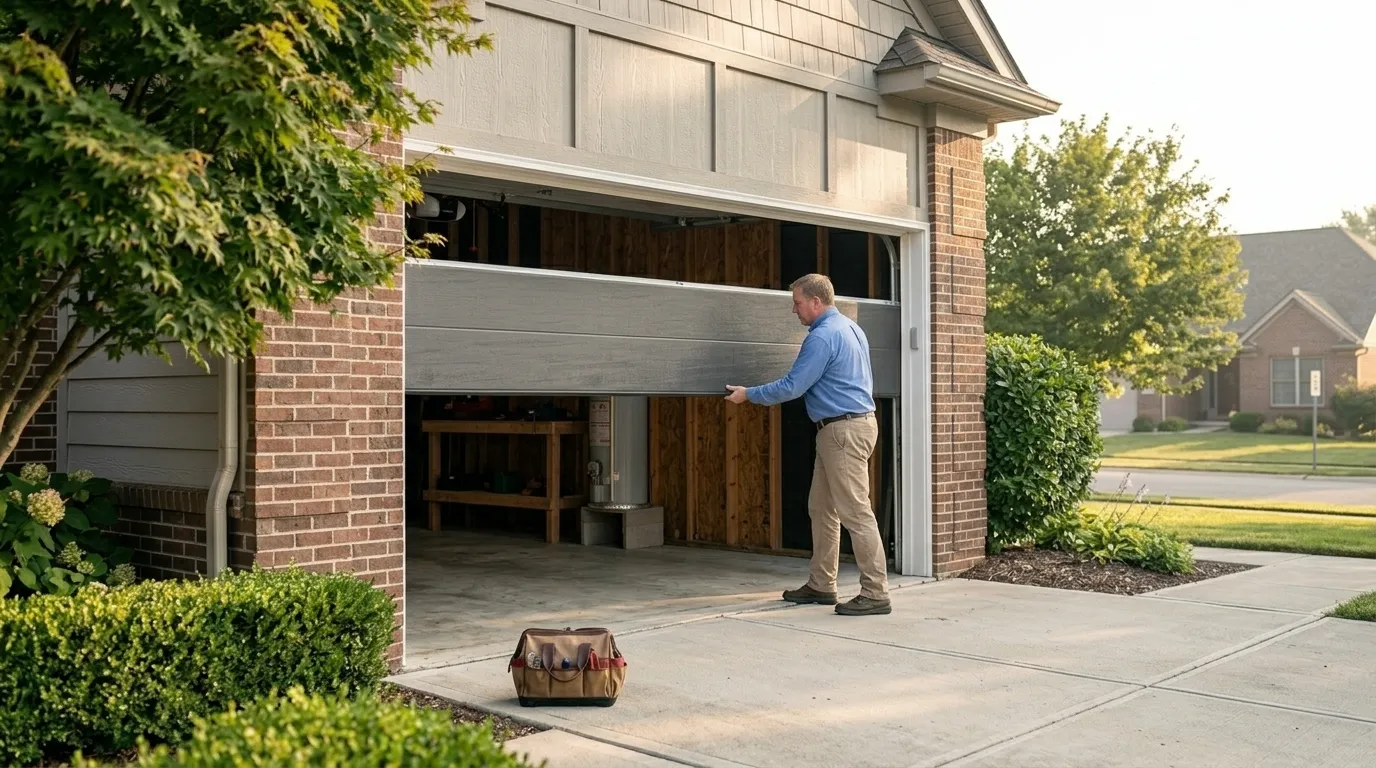
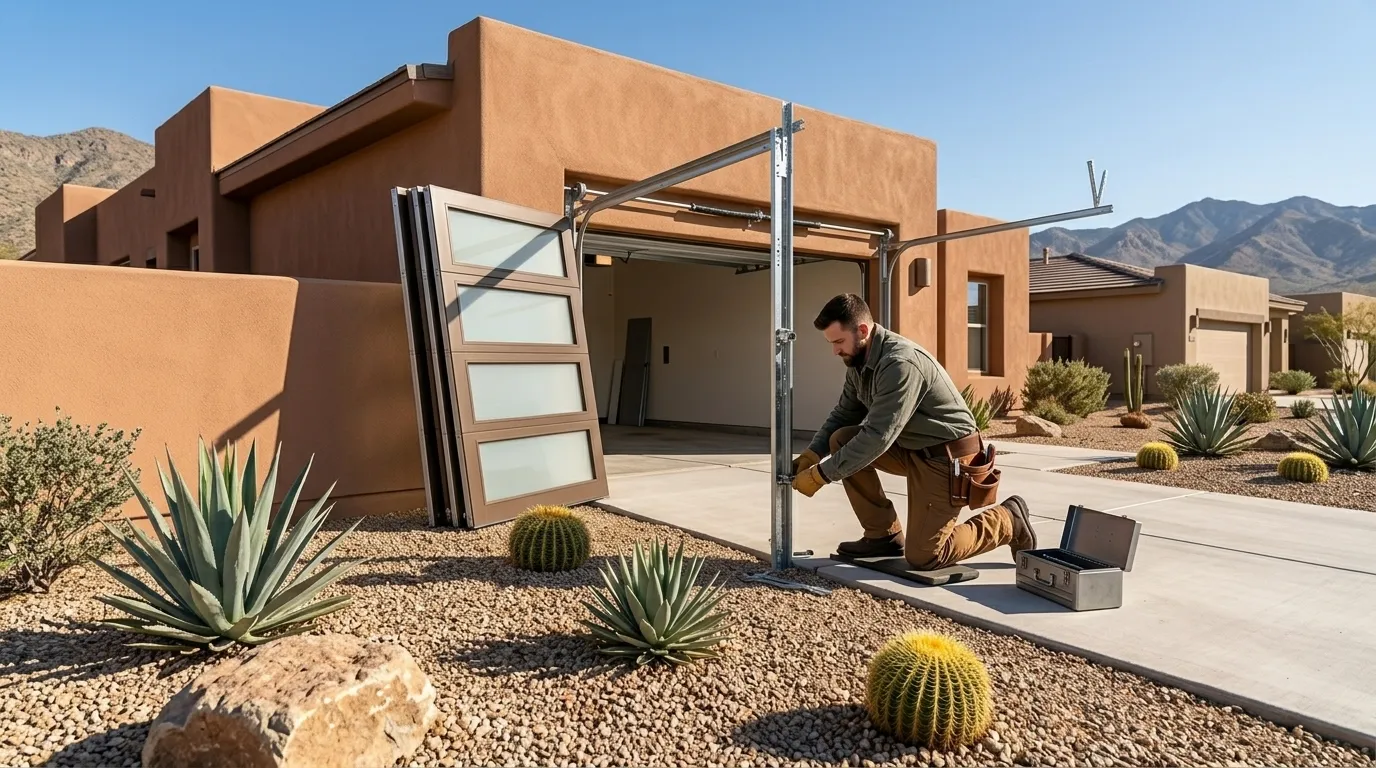
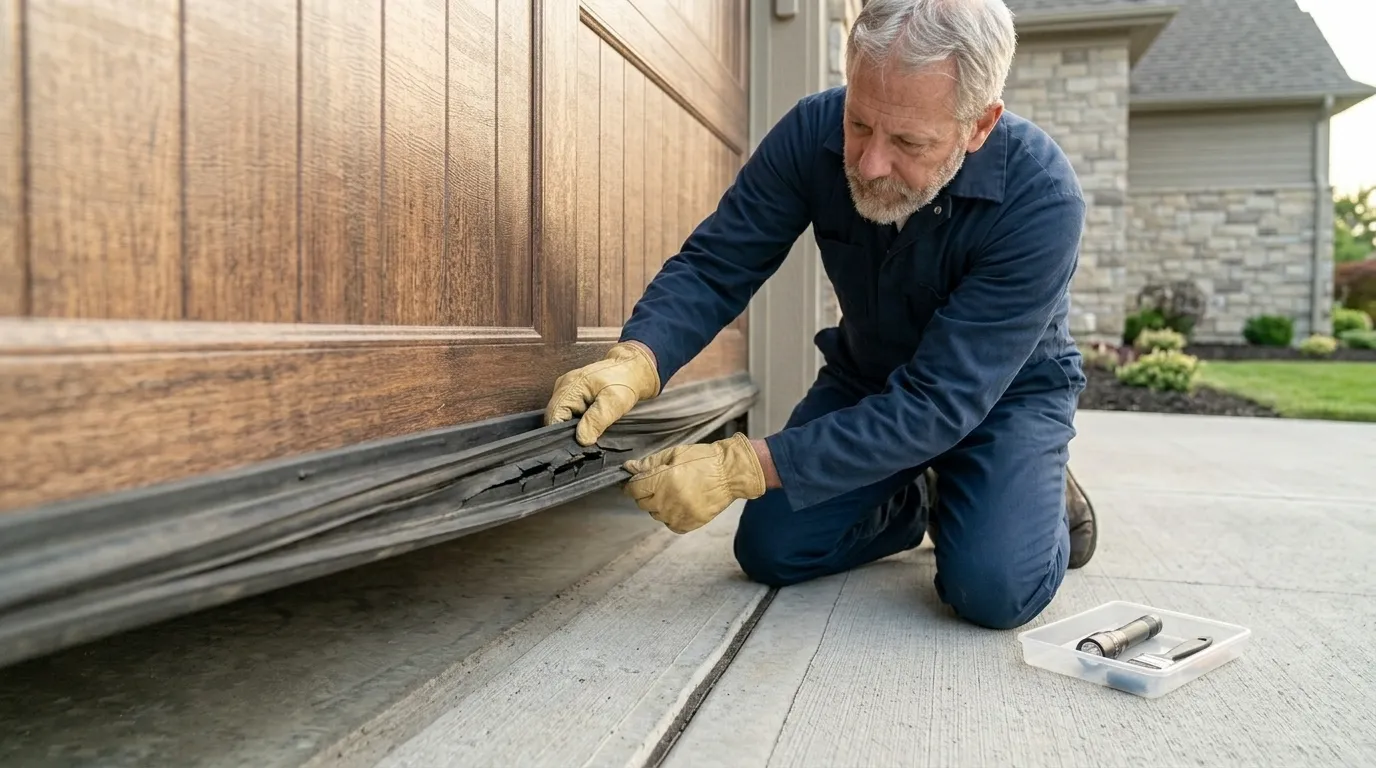
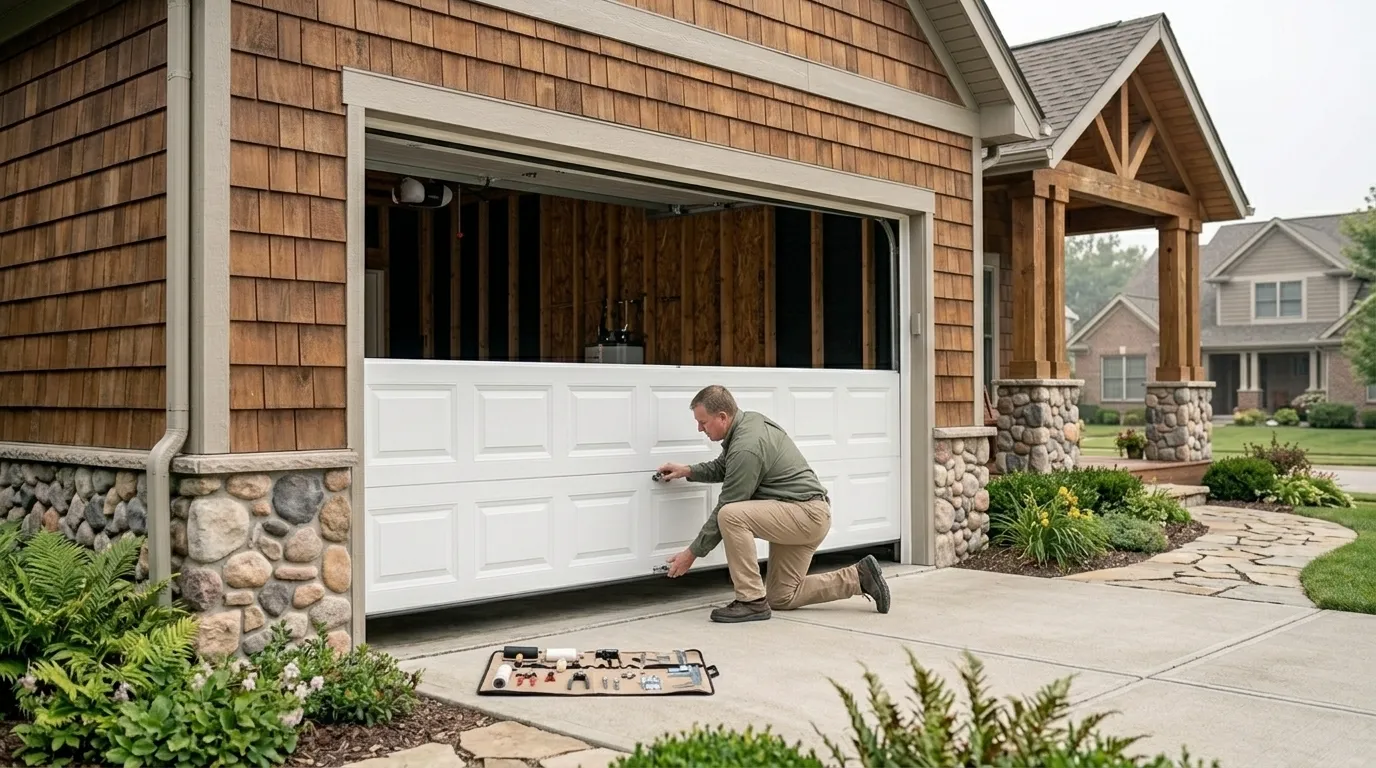
The fault we see most in Sun Valley is a bottom or second-row panel that's dented, cracked, or rusted through while the rest of the door still runs fine. It's almost never the whole door that's bad - it's one section that took a hit or gave out first, and the owner wants that fixed without paying for a full replacement.
That pattern traces straight back to when the neighborhood was built. Housing here went up mostly in the late 1980s and 90s, with a median build year of 1989, and the garage doors that came with those houses were steel sectional panels with foam-in-place insulation sandwiched between two thin steel skins. After thirty-plus years, the foam bond weakens, the steel skin flexes more than it should, and a stray bump from a car bumper or a hard hail hit puts a permanent dent or crack in a panel that used to shrug it off.
Cold winters make it worse. This area sits in a severe cold climate band, and repeated freeze-thaw cycles work on any spot where the steel skin has already separated from the foam core. Moisture gets into that gap, and you end up with rust bubbling up from the inside out, not just surface rust you can sand and paint.
Where This Job Goes Sideways
The honest limitation on this job: matching a single replacement panel to a door built around 1989 is not always possible. Panel profiles, rib patterns, and colors changed across manufacturers and model years, and a lot of the doors from that era are long discontinued. If we can't get an exact match, the choices are a close-but-visible mismatch, a full panel set in a new color, or a full door replacement - and we'll tell you which one we think makes sense rather than sell you a patch that looks wrong for ten years.
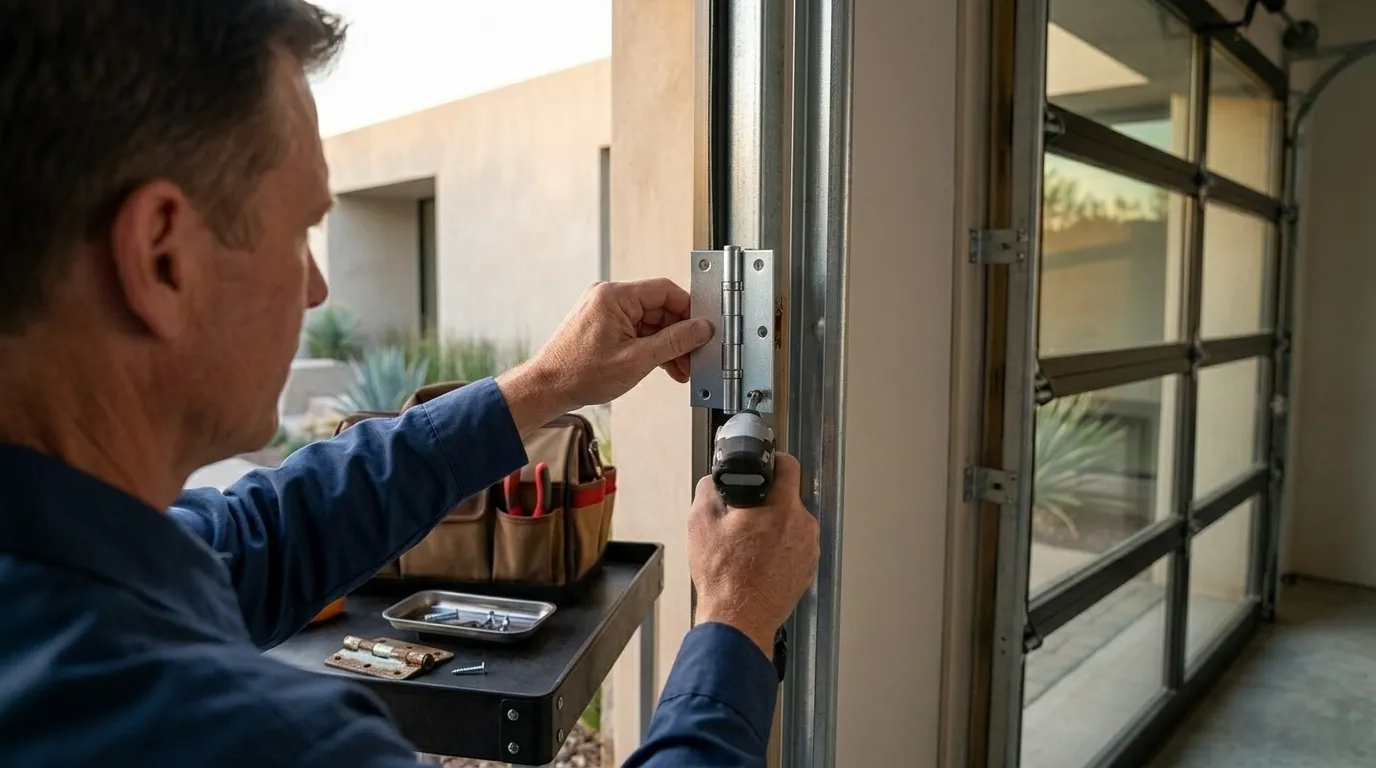
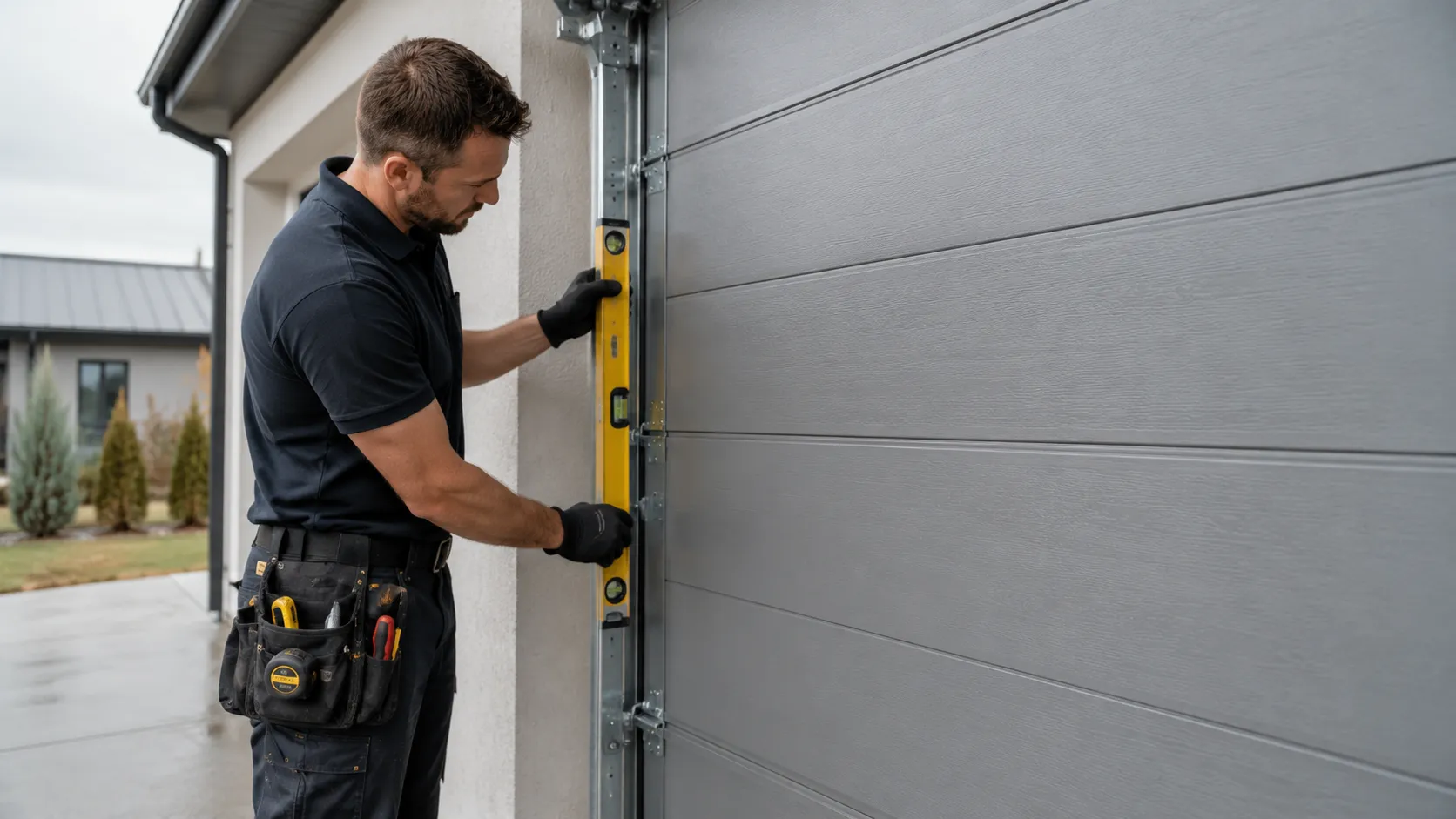
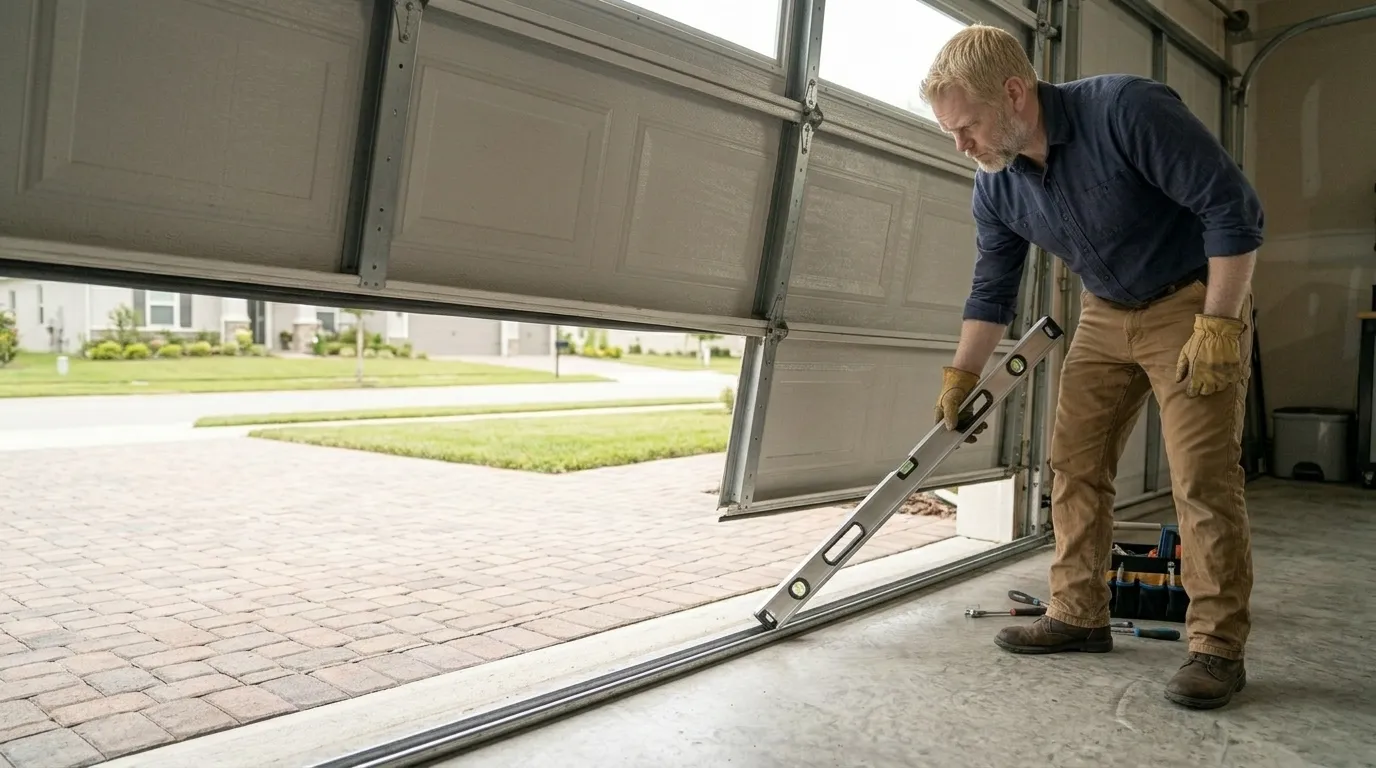
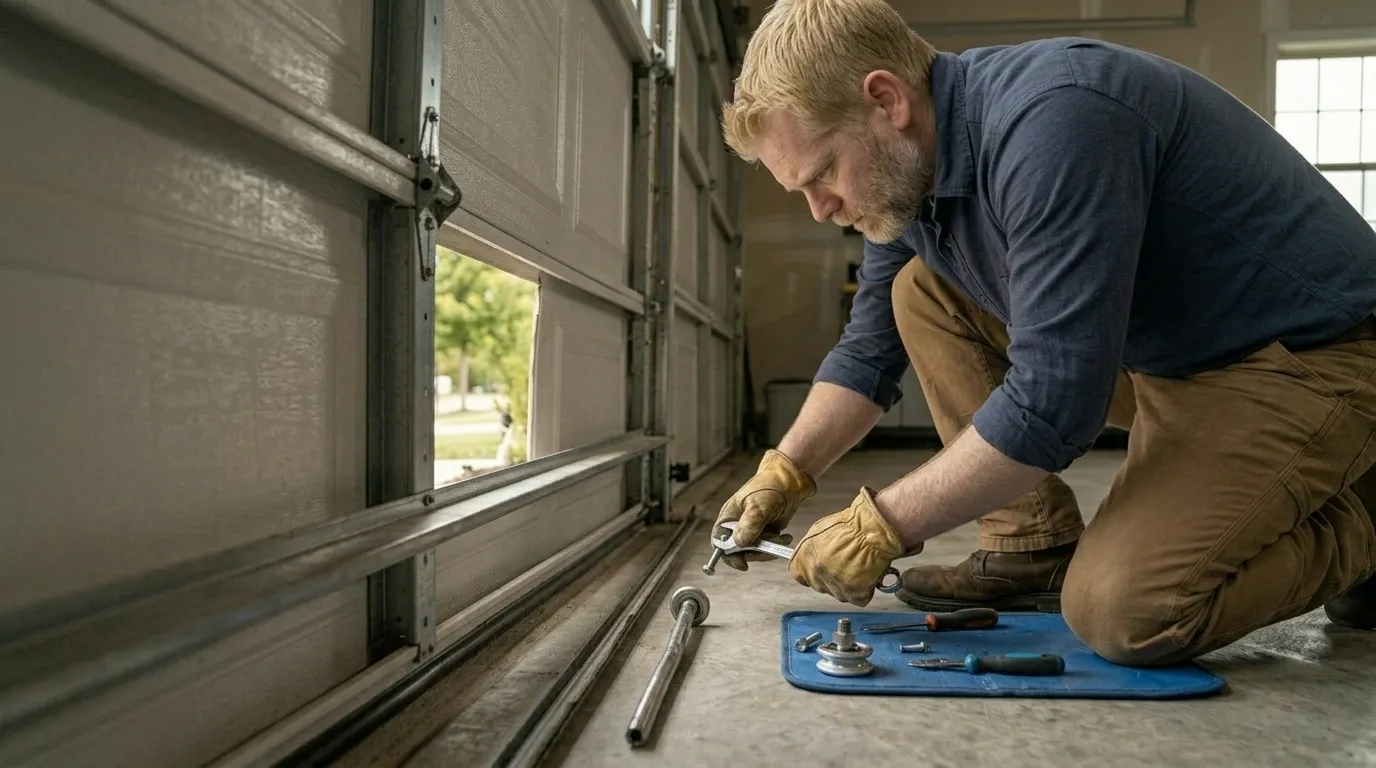
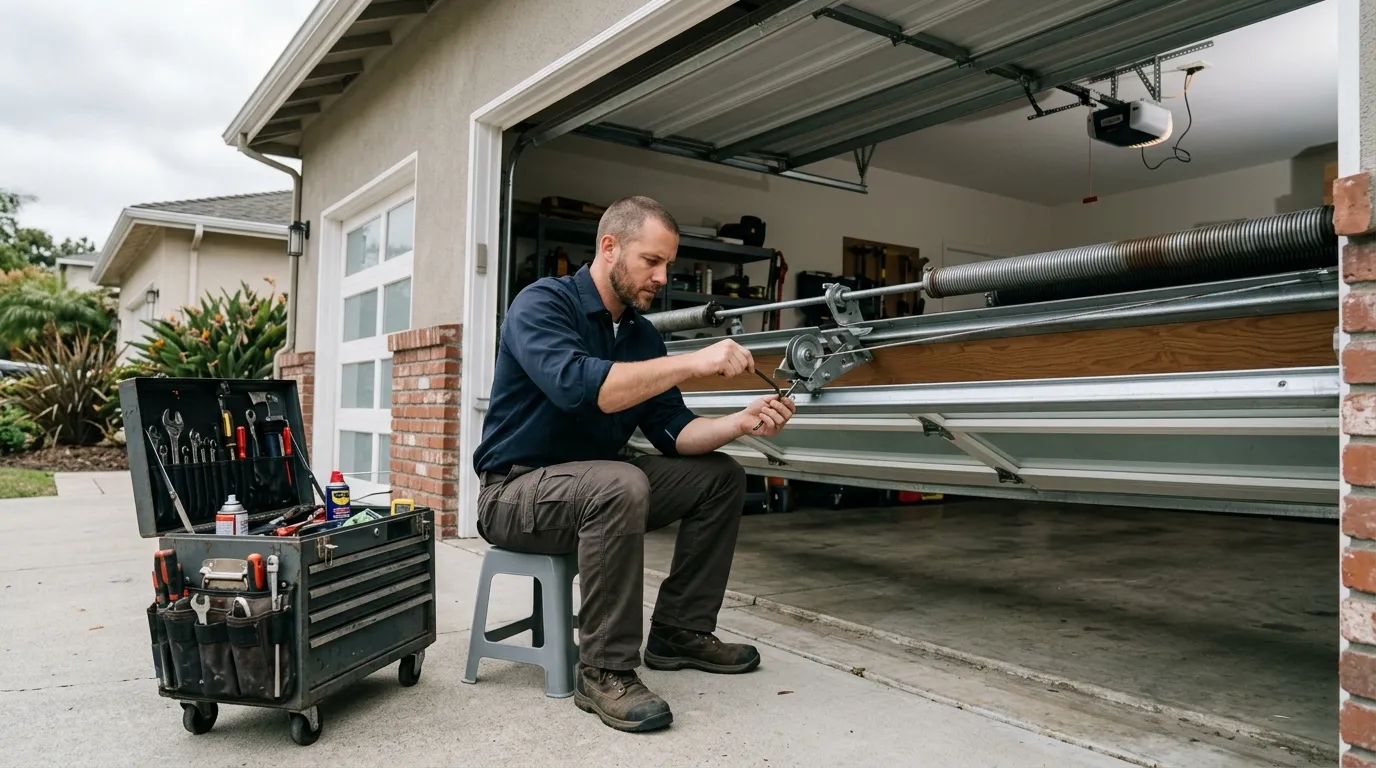
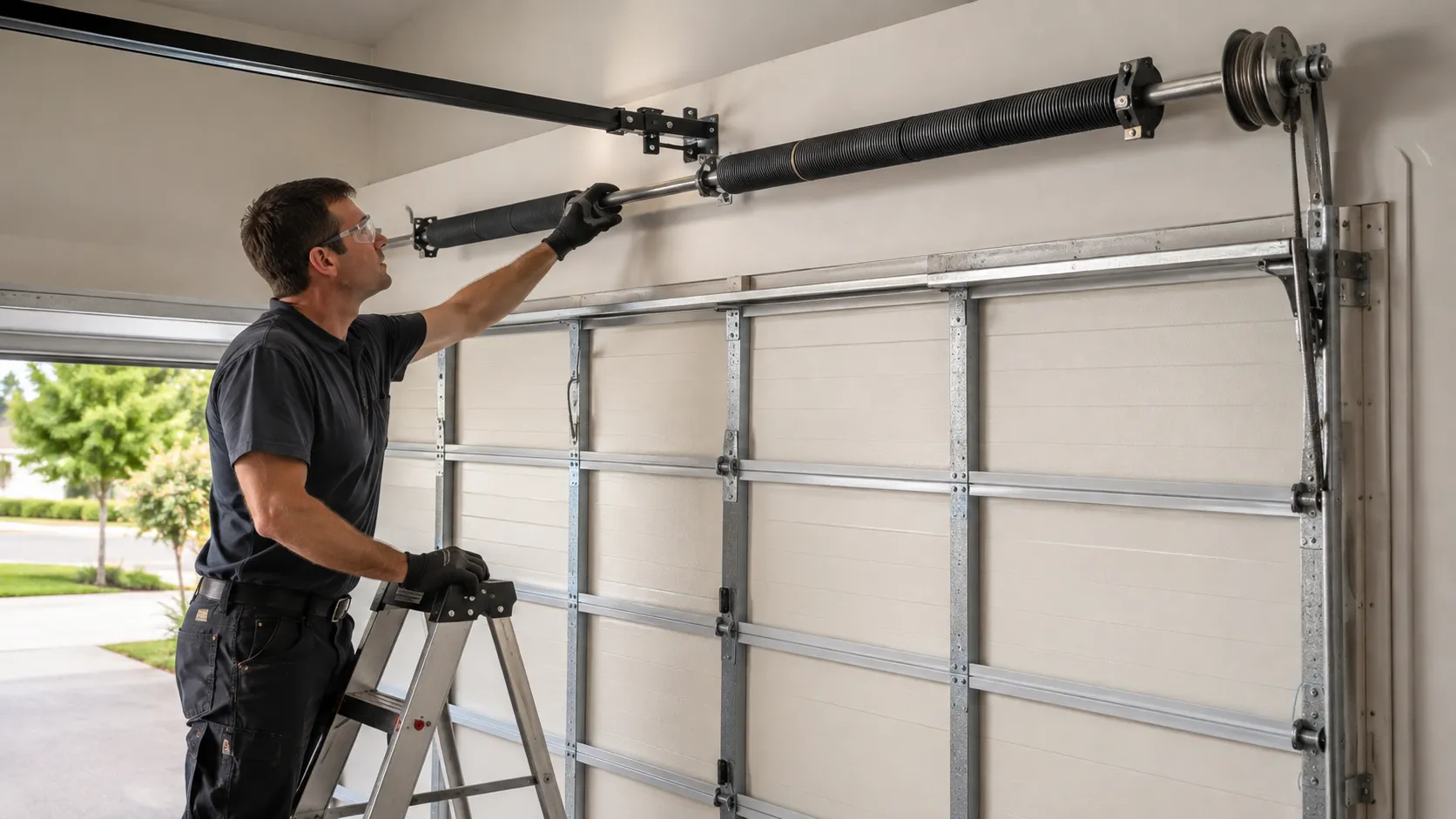
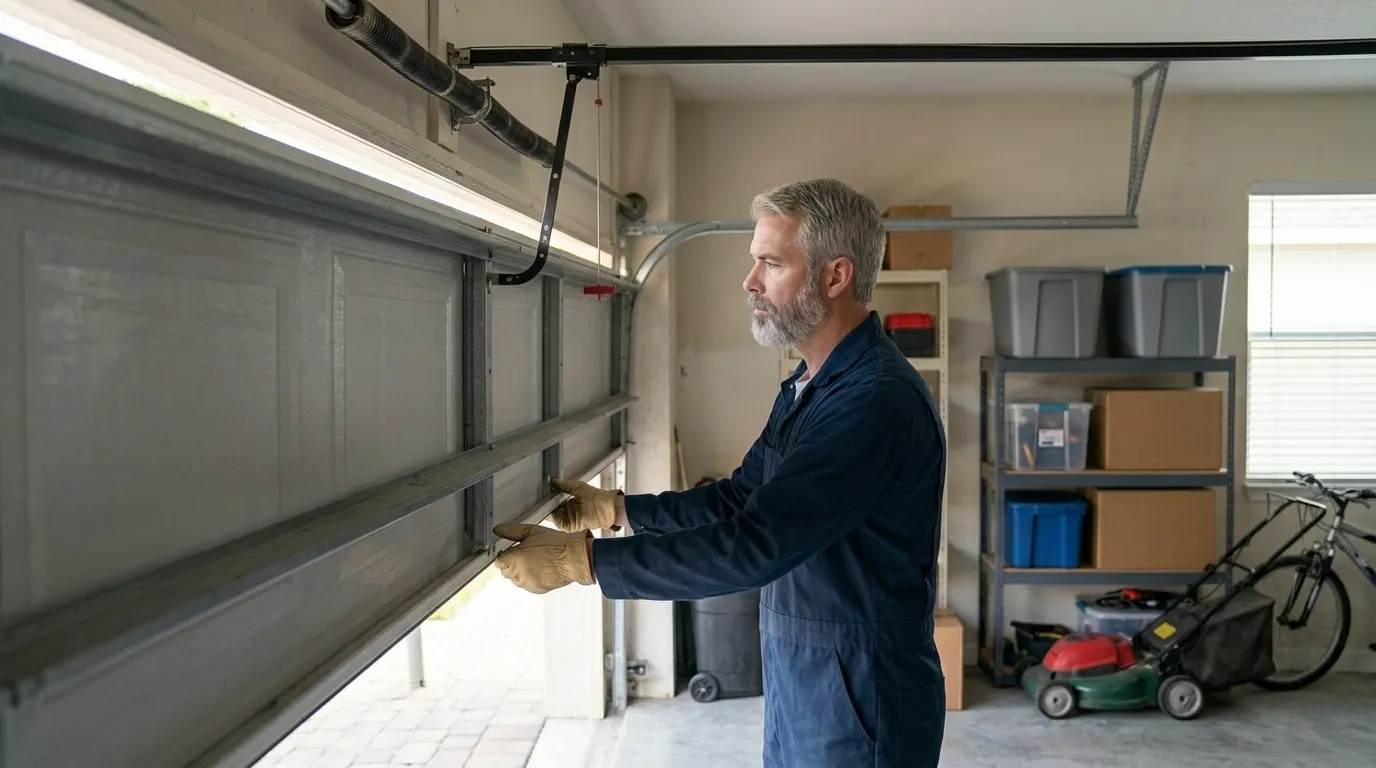
The other place this goes sideways is when a customer wants just the dented panel swapped but the track, rollers, or hinges on that section are also worn from the same age and impact. Putting a new panel on tired hardware can mean it's back out of alignment within a few months. We'd rather flag that up front than come back for a second call.
How Long You Are Without the Door
If we have the matching panel in stock or a close equivalent, it's a same-visit swap and the door is back in service before we leave. If the panel has to be special-ordered because the door is an older, discontinued style, you're looking at a wait measured in days while it ships in - we don't have a fixed number to promise you here, and we won't invent one.
Either way, the door stays operable in the meantime in almost every case. A single damaged panel rarely keeps the whole door from opening and closing; it just runs rougher and looks worse until the new panel goes in.
What It Costs
We don't have a set price to quote here without seeing the door - panel cost swings a lot depending on whether it's a stock match, a special order, or a full multi-panel set, and we're not going to put a number on the page that doesn't hold up when the truck shows up. What we can tell you is that a single-panel swap on a door with otherwise sound hardware costs less than most people expect, and a full replacement door costs more but comes with new hardware and insulation instead of patched-together parts from a 35-year-old system.
Given that median household income in this service area runs lower than in parts of Reno, at $76,108, we try to be upfront early about whether a repair is worth doing versus whether the door's age means the money's better spent on full replacement.