When Waiting Is Fine
Not every uninsulated door needs to come off the hinges this year. If the door still opens square, the panels aren't rusted through, and the garage isn't a living space you heat, an old single-layer steel door can keep doing its job for a while yet. The insulation gap matters most when the garage backs onto a bedroom or laundry room, or when you're running a heater out there through the winter. If it's just parking and storage, the energy loss is real but small money against a full swap. We'll tell you straight when a door has years left instead of pushing a replacement you don't need yet. That's the honest limit of what insulation buys you: comfort and a lower heat bill, not a structural fix.
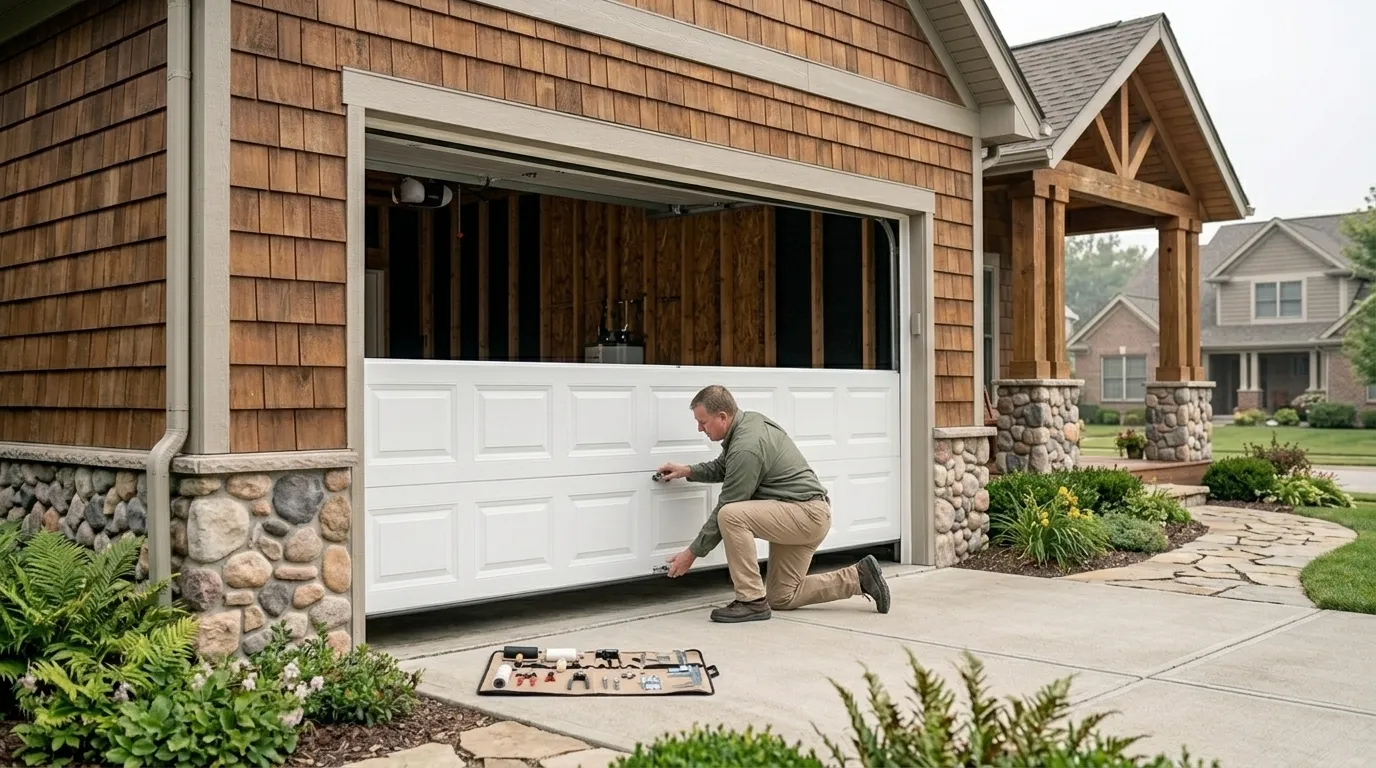
What does need attention regardless of age is weatherstripping at the bottom and sides. A worn seal lets in more cold air than a bare steel panel does, and it's a small job compared to swapping the whole door. Start there before deciding the door itself has to go.
What It Costs
We don't have a price list to hand you here, so we won't invent one. What we can say is that the decision usually comes down to the same trade-off: an insulated replacement door costs more up front than patching weatherstripping and living with the panel you have, and the payoff shows up slowly, in a warmer garage wall and a slightly lower winter heat bill, not in a single dramatic fix.
Median household income across the service area runs a little over $102,000, which puts a full door swap within reach for a lot of homeowners here without it being a snap decision. For most, it's a project that gets done when the door is already due for other reasons, like a spring or opener failure, rather than insulation alone driving the call. If your only complaint is a cold garage, ask about sealing and weatherstripping first before committing to a full replacement.
How Local Conditions Play In
Reno sits in a cold-severe climate band, which is the piece that turns an old uninsulated door from a minor annoyance into a real energy leak. A steel panel with no foam core doesn't just let heat out, it lets the cold radiate straight into whatever wall it shares with the house. On a 1989-era door that's been doing this for over three decades, that's a lot of winters of the same loss.
The effect isn't uniform across the area. In-town neighborhoods close to the valley floor see milder swings than the outlying spots. Out toward Verdi, seven miles west, or Cold Springs and Spanish Springs, twelve miles out, the same era of door is holding back harder cold, and an uninsulated panel there works noticeably harder than the identical door three miles east. If your house sits farther from the valley center, that's worth weighing more heavily than it would be for a place closer in.