When Waiting Is Fine
Not every noise or stiff spot needs a truck that day. A door that groans on the way up but still opens and closes fully can usually wait a week or two, especially if the house is one of the newer builds in the service area rather than one from the 1938-1989 stretch that makes up most of this housing stock. Older tracks flex more, rollers wear faster, and a little extra noise on a 1960s door is often just age catching up, not a failure in progress.
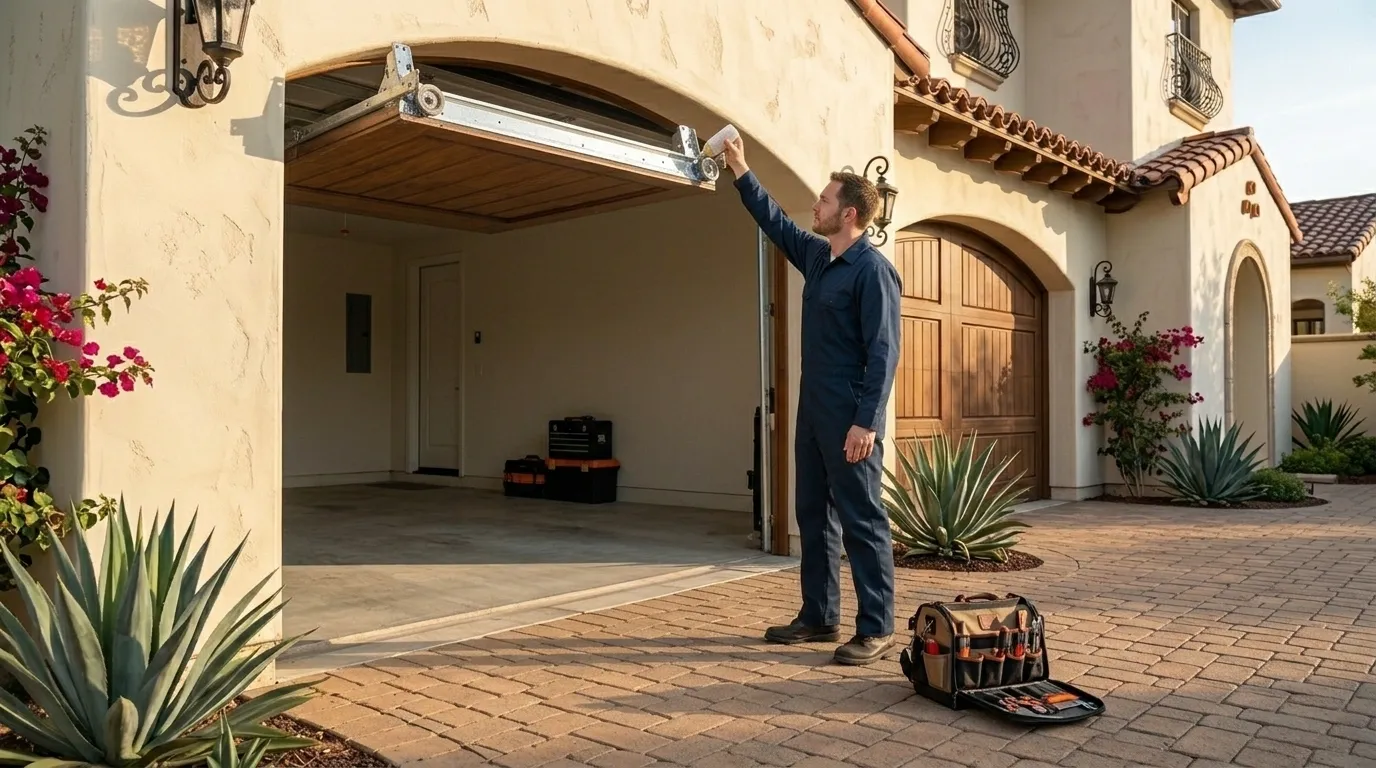
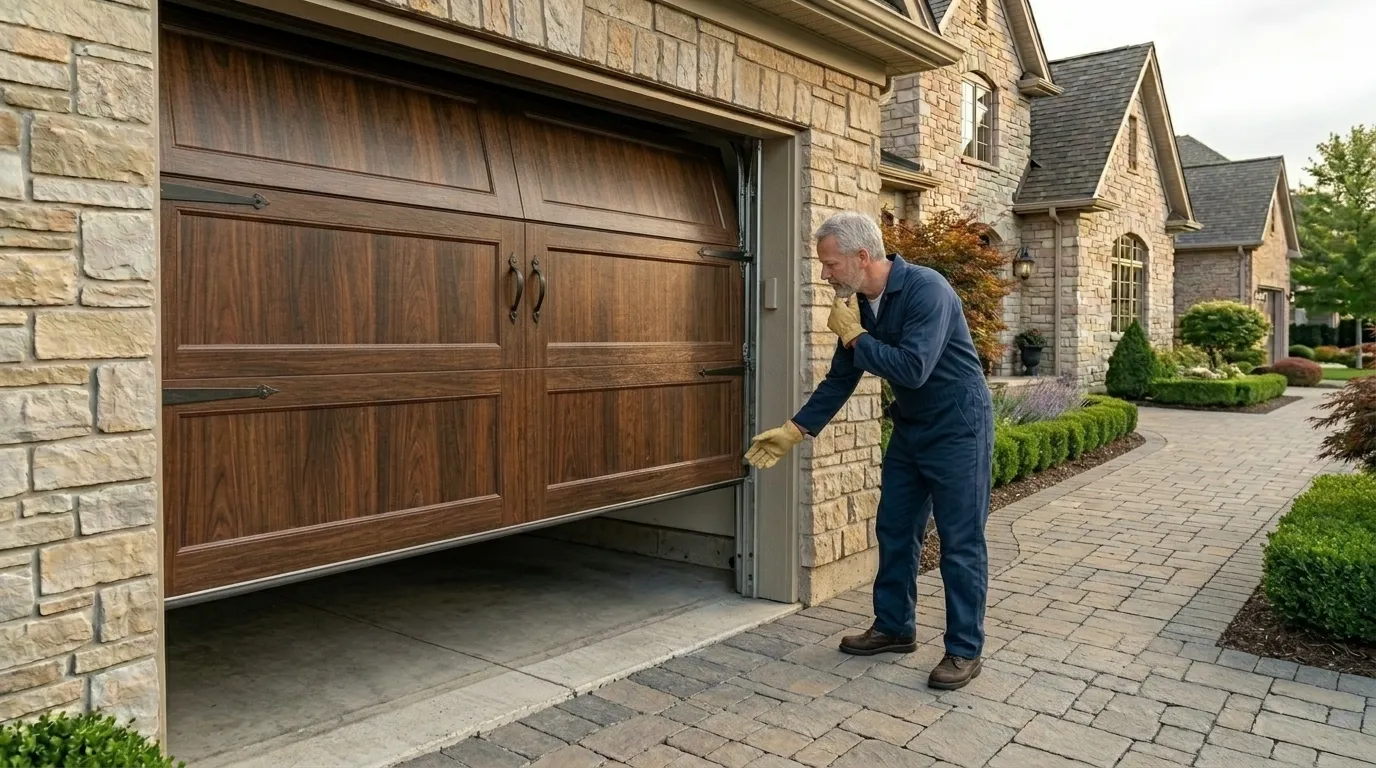
What can wait: a slightly noisy roller, a remote that needs a second press, weatherstripping that's cracked but not torn through. What shouldn't wait: a door that reverses on its own, a spring that's visibly gapped, or an opener that strains and stalls partway up. On this side of a severe cold winter, a strained opener motor working against a stiff, cold-contracted spring is how a Tuesday annoyance turns into a Saturday no-door situation. If you're not sure which category you're in, that's a fair question to ask on the phone before you decide it can wait.
What It Costs
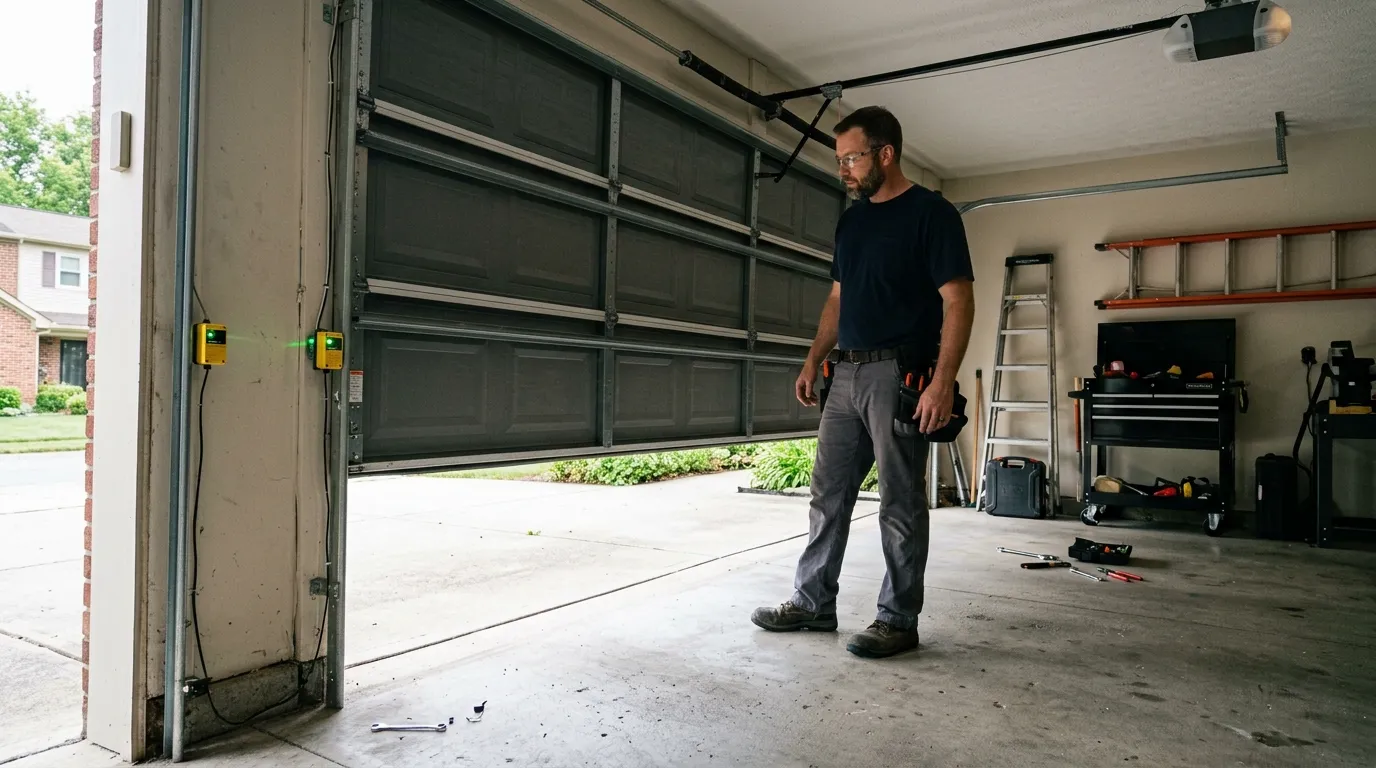
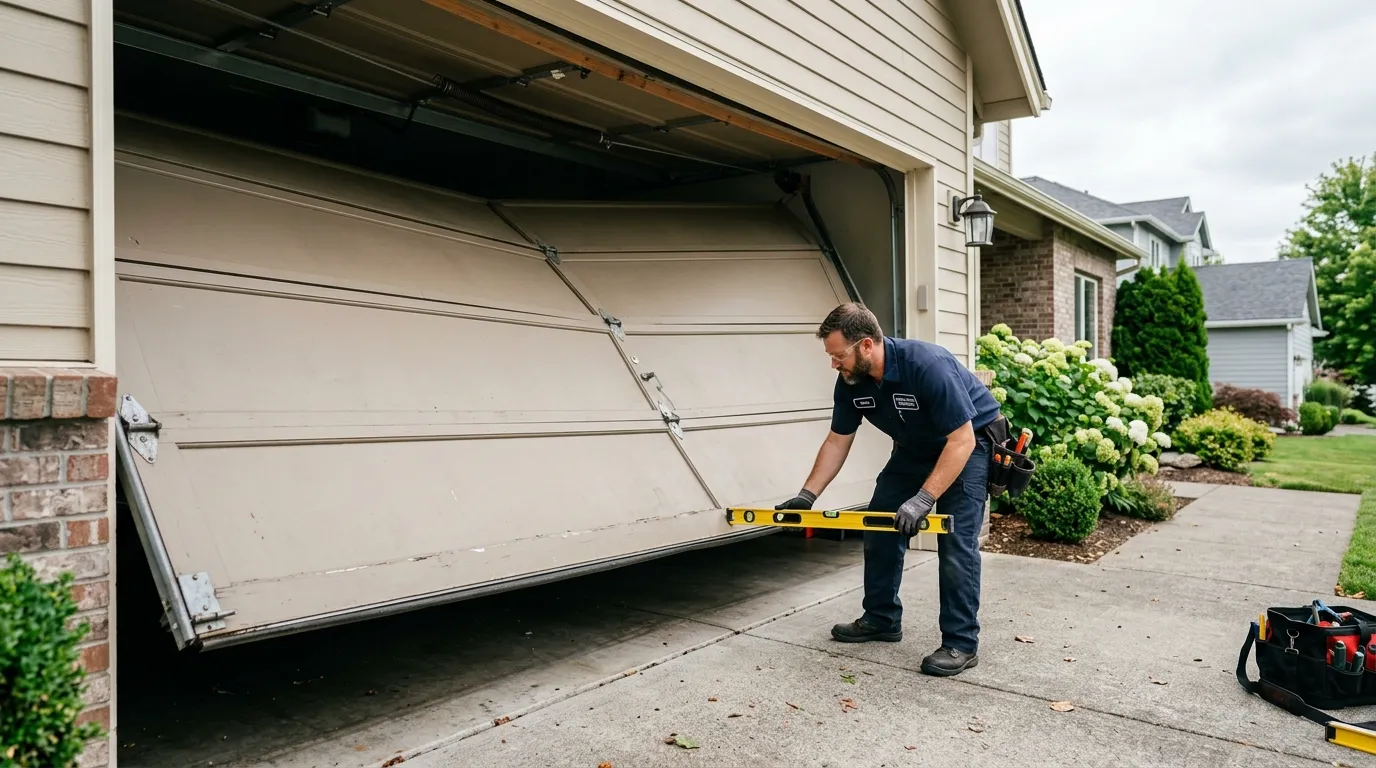
We don't publish a flat number here because what a call actually costs depends on what's wrong, and on a house this age that's rarely one simple thing. A diagnostic and adjustment is a different job than a full torsion spring replacement on a double door, and a call to a house with original 1980s hardware often turns up a second worn part once the first one's off.
With median household income in this service area around $102,625, we see a mix of owners who want the cheapest fix that gets the door moving again and owners who'd rather replace an opener now than call again in a year. Neither is wrong. What we do is tell you, once we've actually looked at the door, whether a repair is worth doing or whether the hardware's old enough that replacement is the better use of your money. We won't quote a price sight unseen over the phone, because on a door this old, guessing at parts before we've seen the spring gauge or the drum wear is how estimates end up wrong.
How Local Conditions Play In
Reno sits in a severe cold climate band, and that shows up directly in service calls. Steel torsion springs lose a measurable amount of tension as temperature drops, so a spring that's been marginal all summer often finally lets go on the first hard freeze morning. Openers feel it too - older chain-drive units with steel gears bind up when cold-contracted metal meets grease that's thickened overnight, which is why we see a run of stuck-door calls right after the first real cold snap each year.
Distance plays a small role in scheduling, not in the work itself: a call to Verdi or Cold Springs runs longer than one a few minutes away in West University or Northwest Reno, just given the miles, and that can affect same-day availability more than anything about the door itself. But the core of it is the housing. A 1980s or 90s door in this climate band ages differently than the same door would somewhere mild - the hardware works harder every winter, and that's the honest reason repeat calls on older doors cluster here.