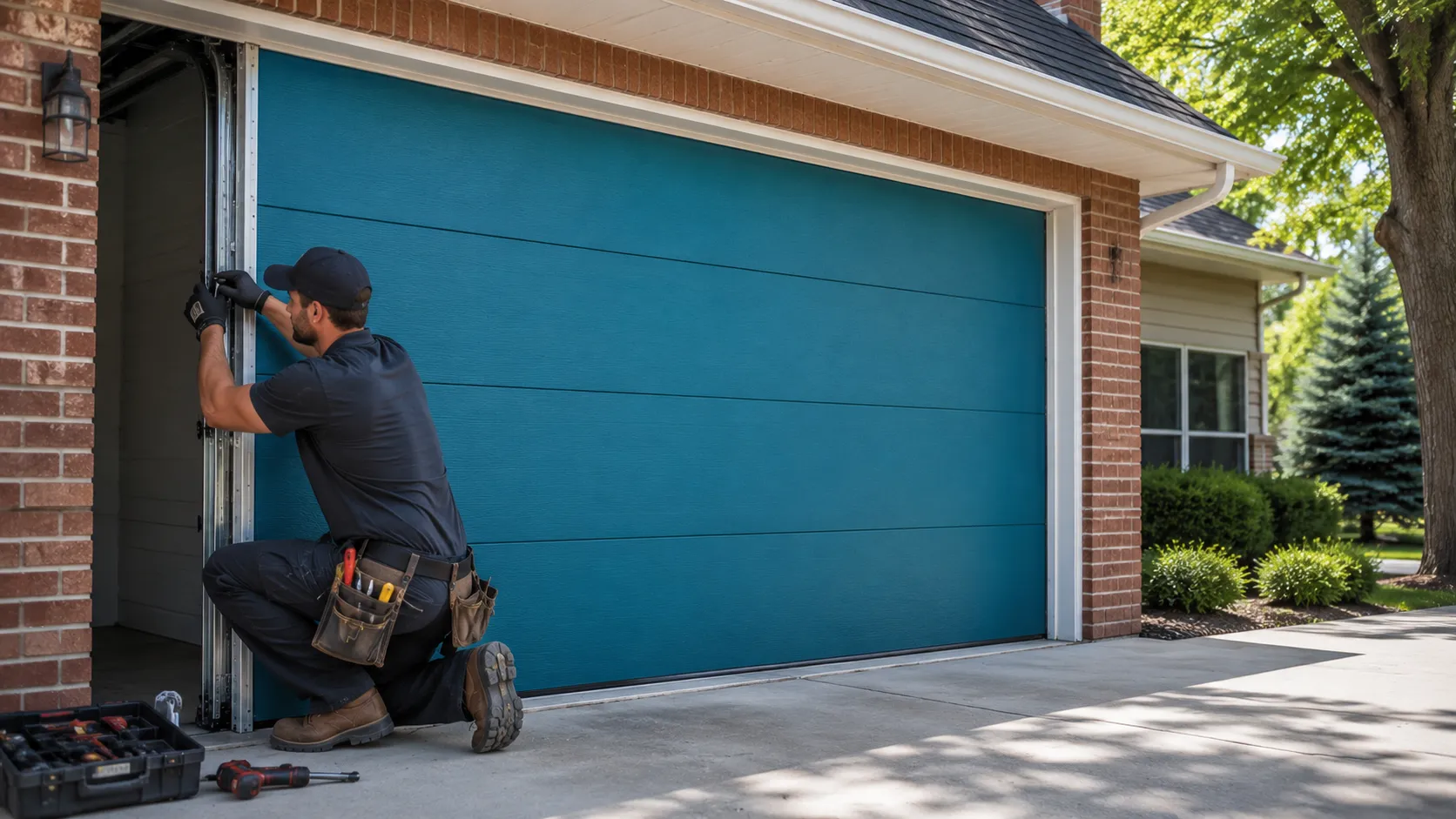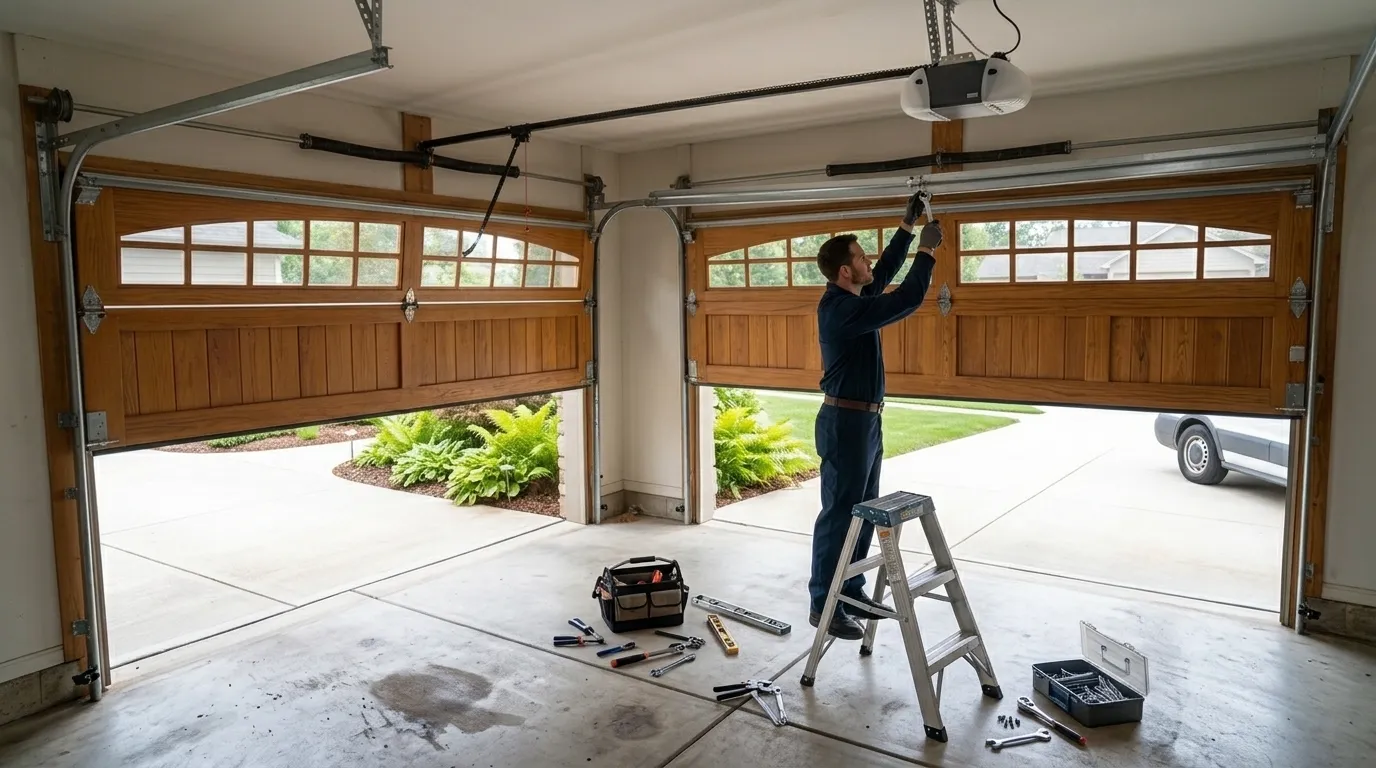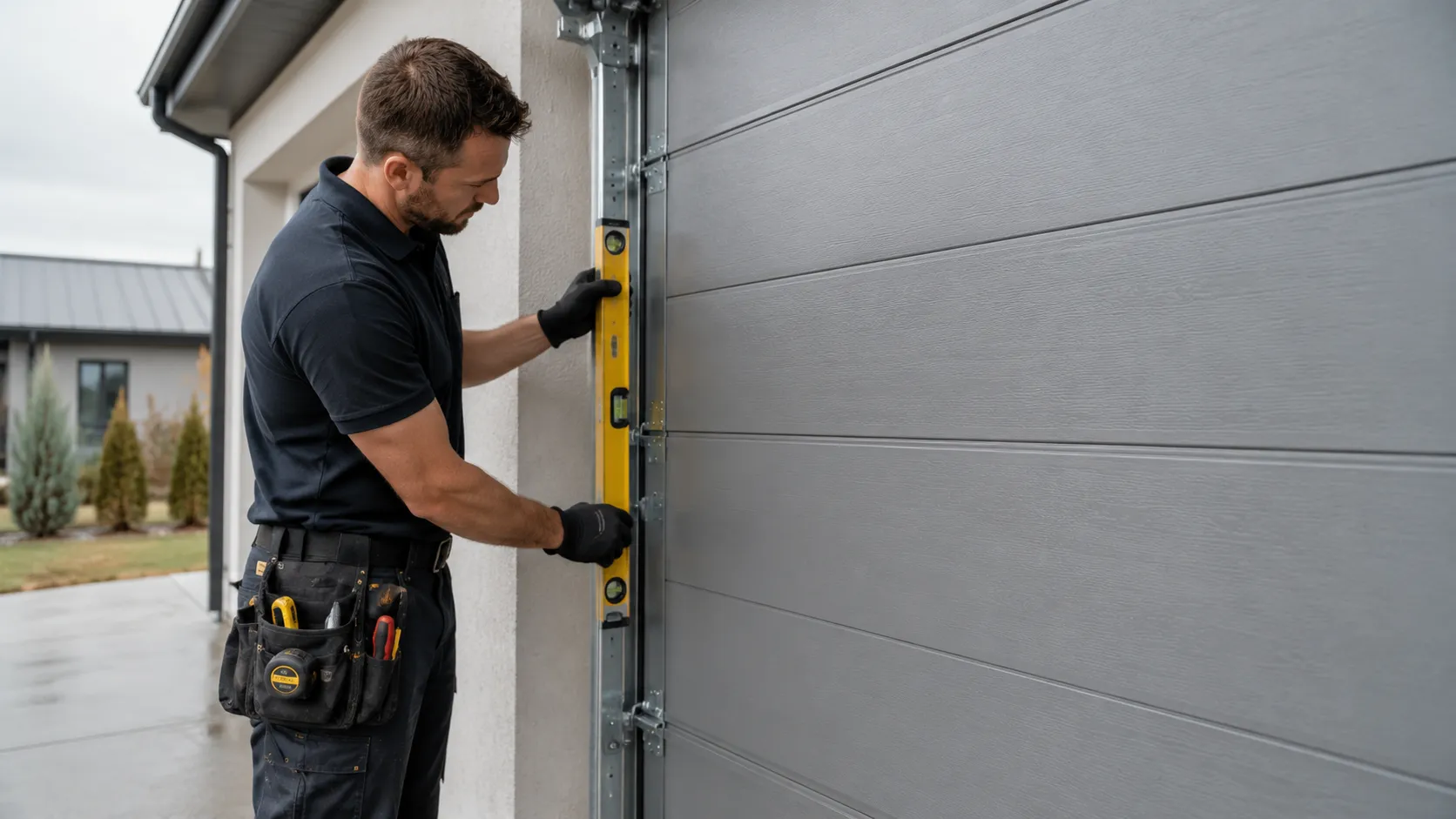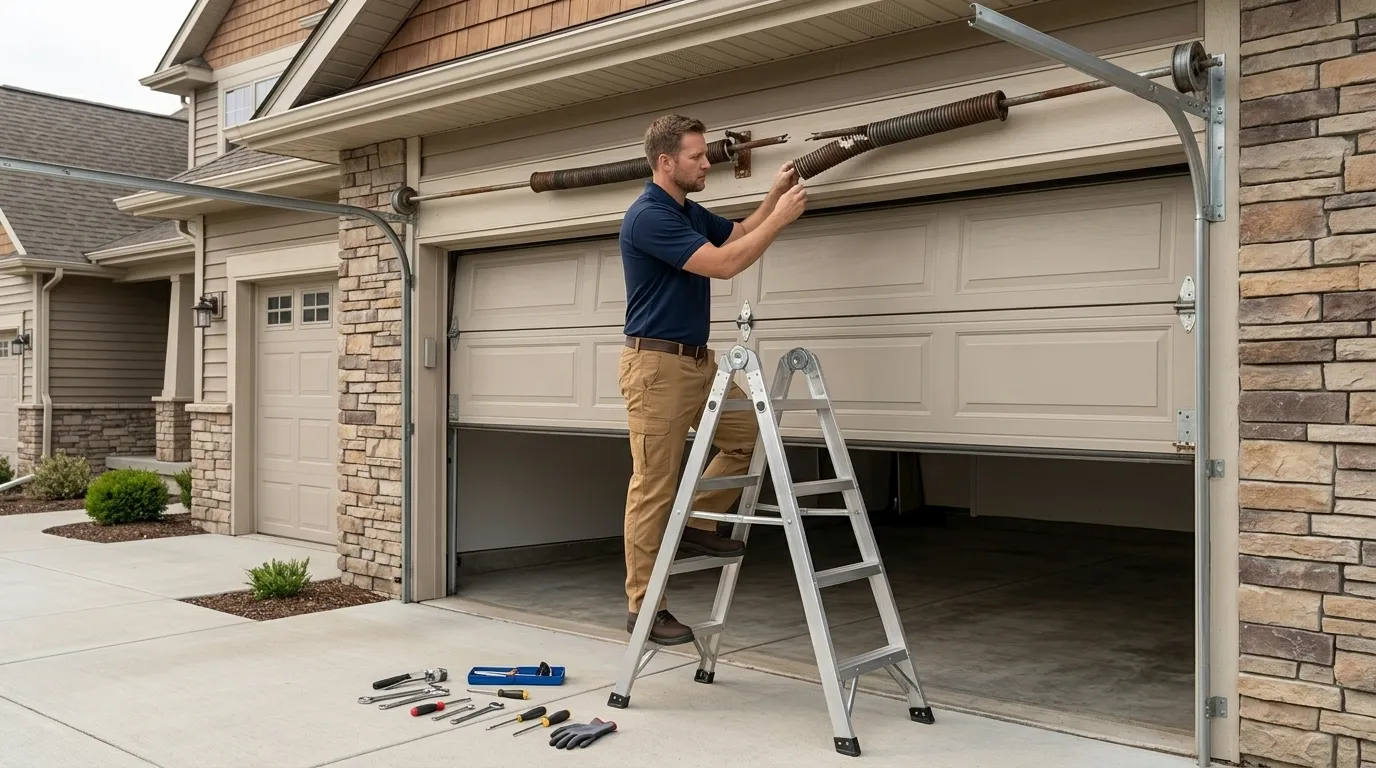
What It Costs
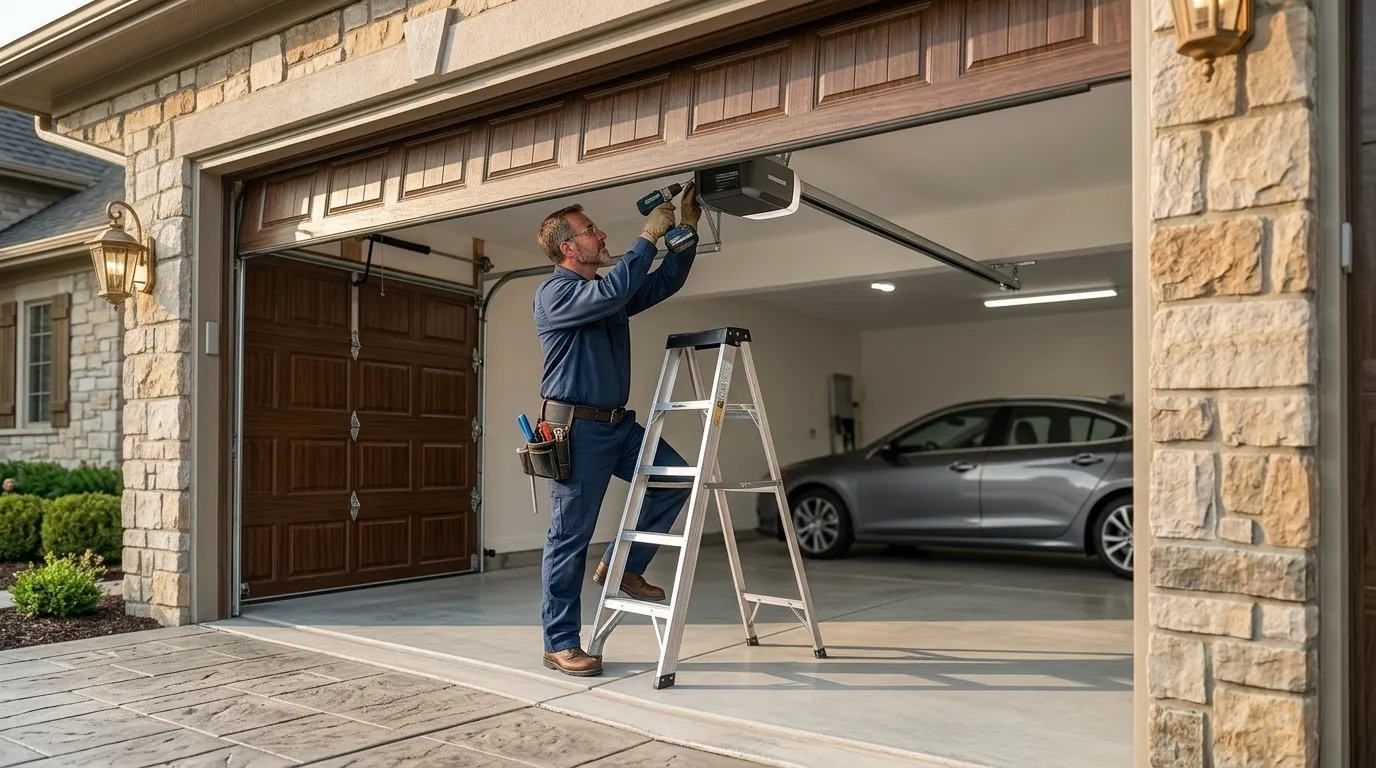
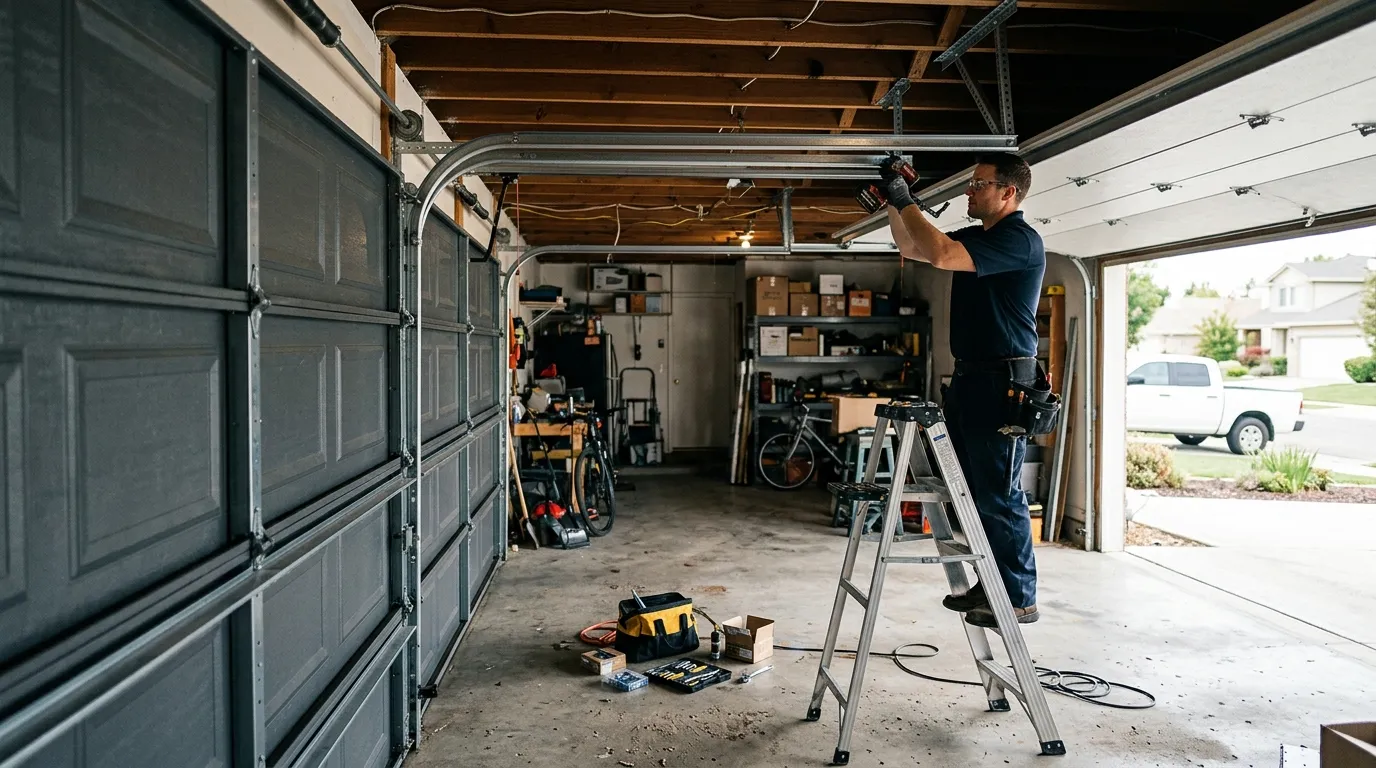
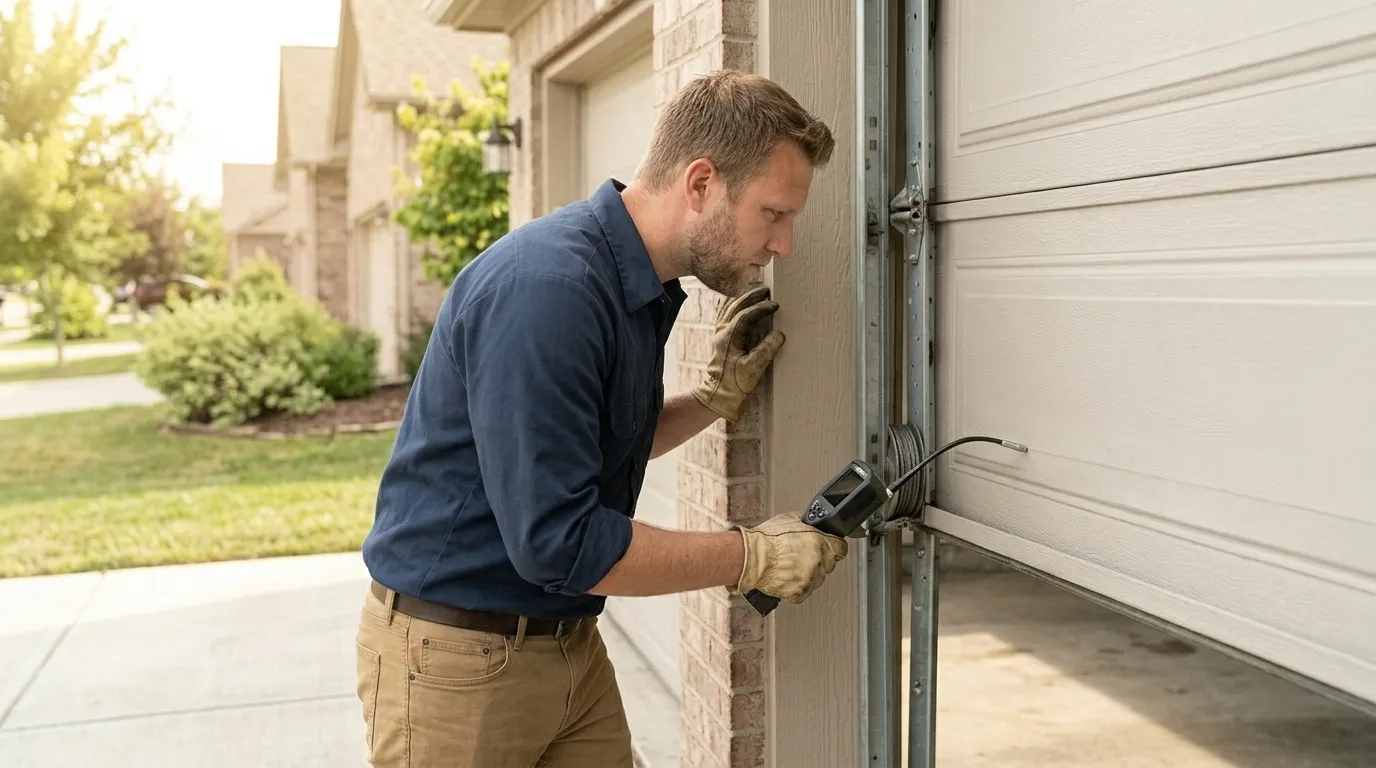
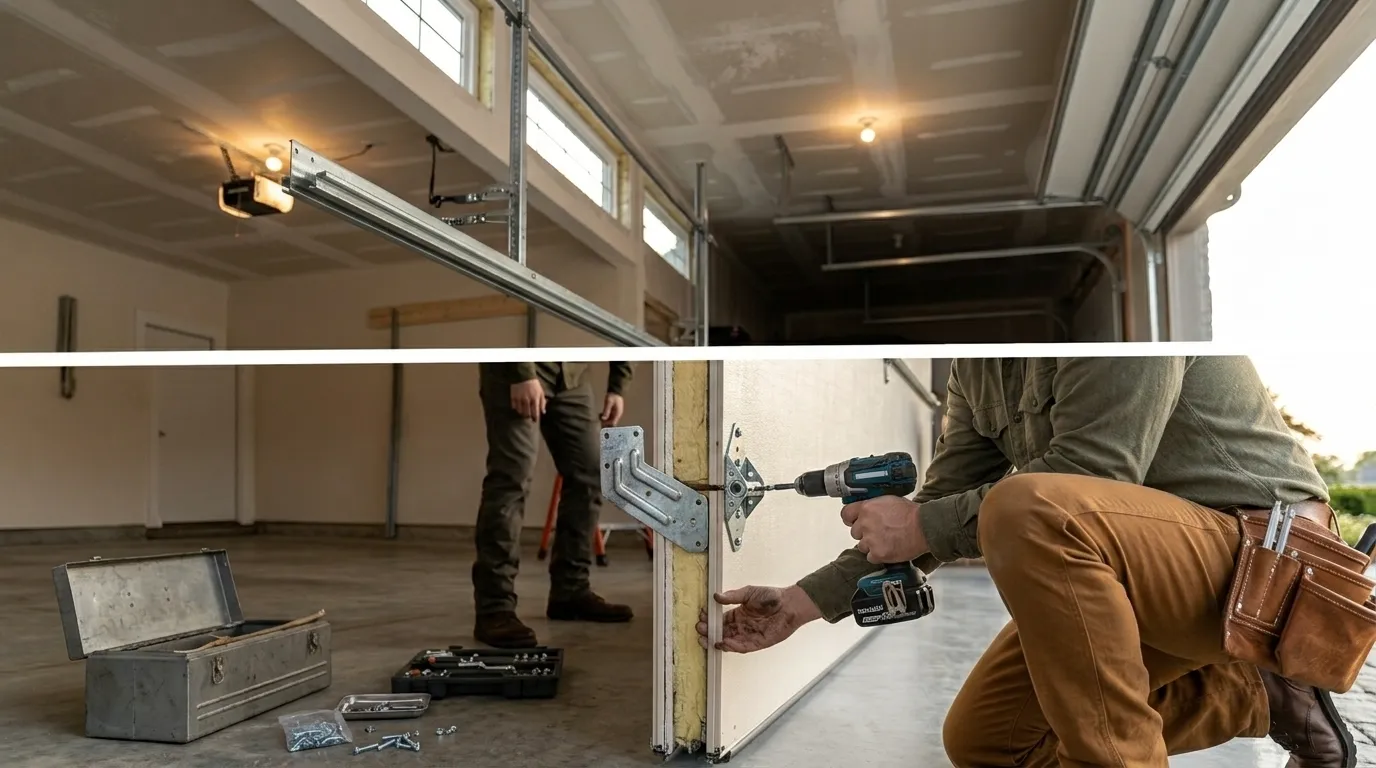
We don't post a flat number here because two doors that look the same on a showroom wall can price out differently once we're standing in your opening. A single steel door on a house built in the 1980s stock that makes up most of this area usually goes in faster than a double door on an older 1938-1960s build, where the opening is often out of square and the track has to be shimmed to match.
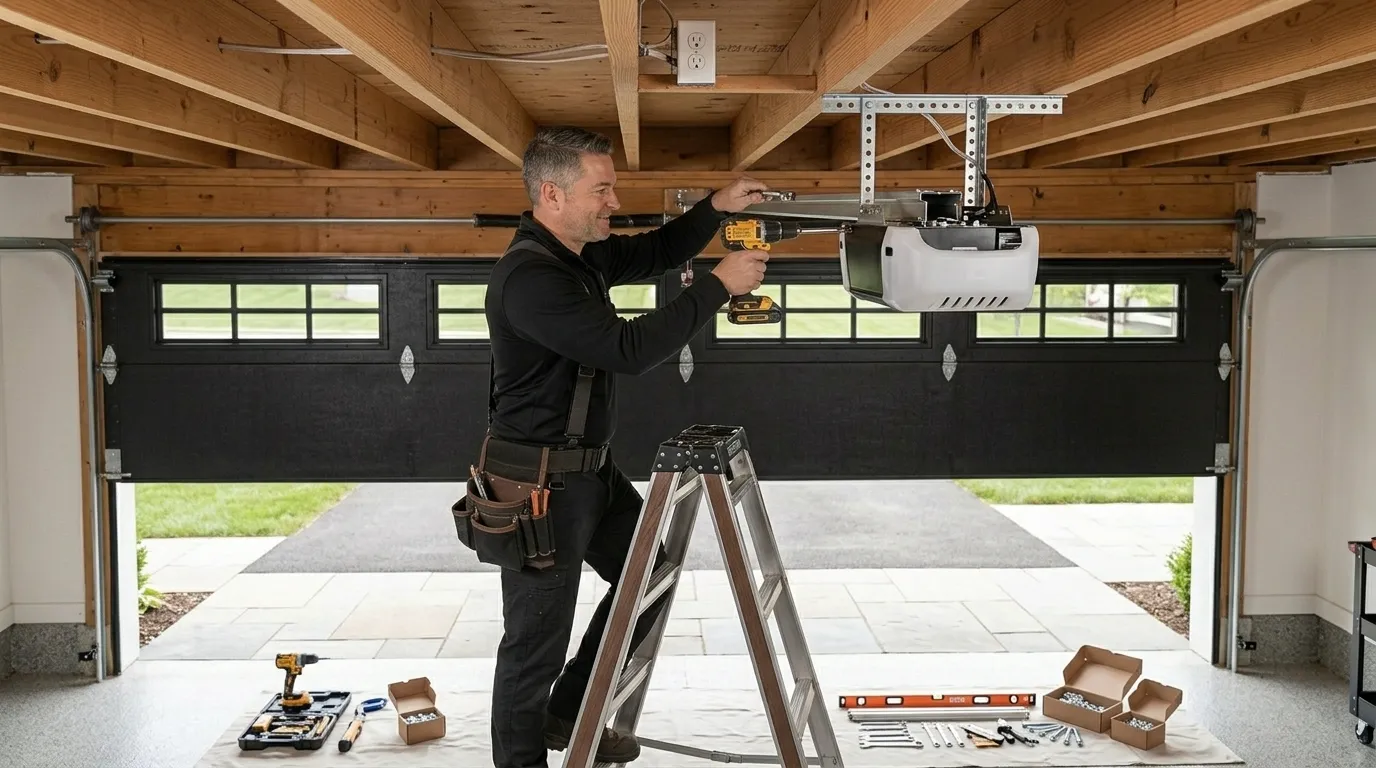
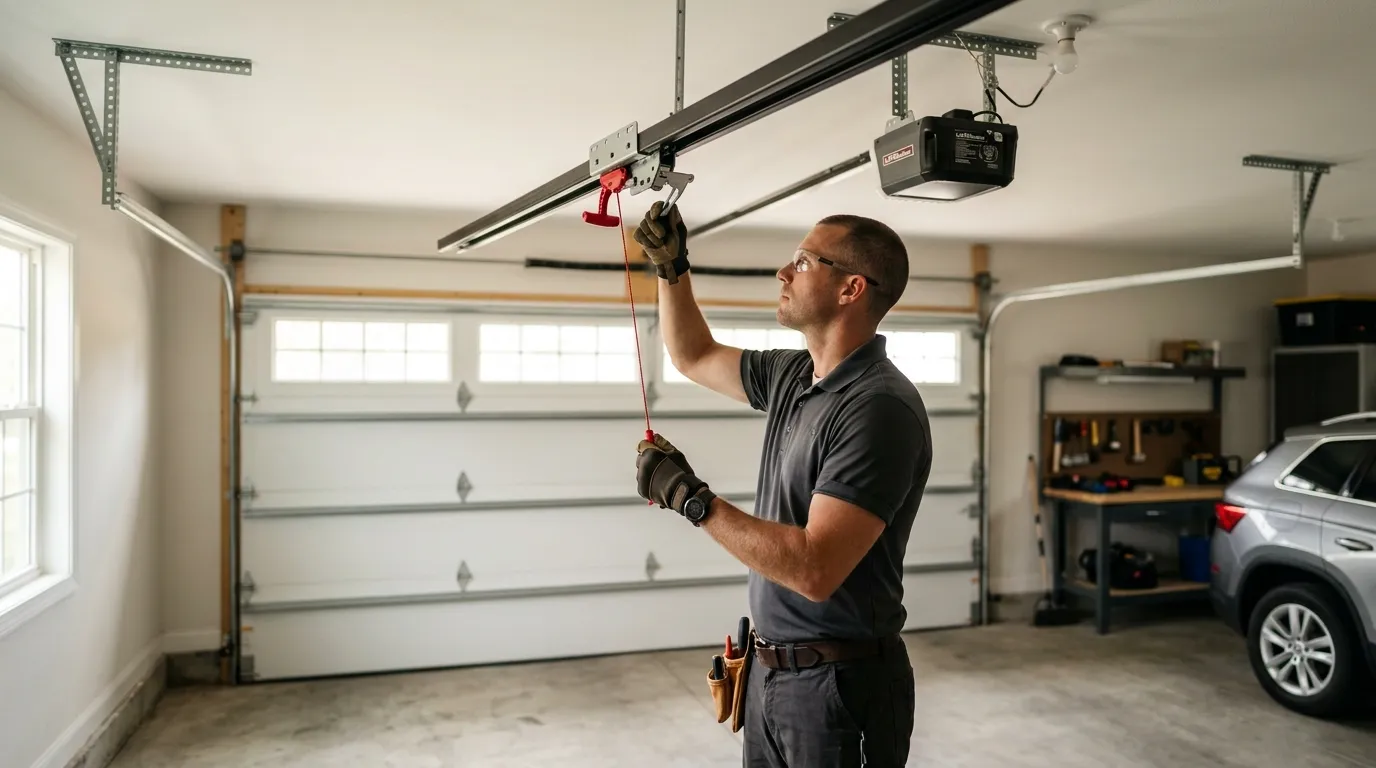
What actually moves the number: door width (single vs. double), insulation level for our cold winters, whether you're keeping the existing opener or replacing it, and whether the jamb needs carpentry work before the door goes in. Homes across the service area, where median household income runs $102,625, tend to ask for insulated steel or composite doors rather than the bare single-layer doors that came standard when a lot of this housing was built.
We'll give you a real number after we look at the opening, not before. Anyone quoting a firm price over the phone without seeing your garage hasn't seen your garage.
Why It Happens Here
Most of the houses we work on in this area went up between 1938 and 2003, with the bulk from the 1980s and 90s spread across five named neighborhoods in the service territory. That range matters for installation because door openings, track spacing, and header framing all followed different standard practices decade to decade - a door sized for a 1990s tract opening doesn't always drop into a 1950s one without adjustment.
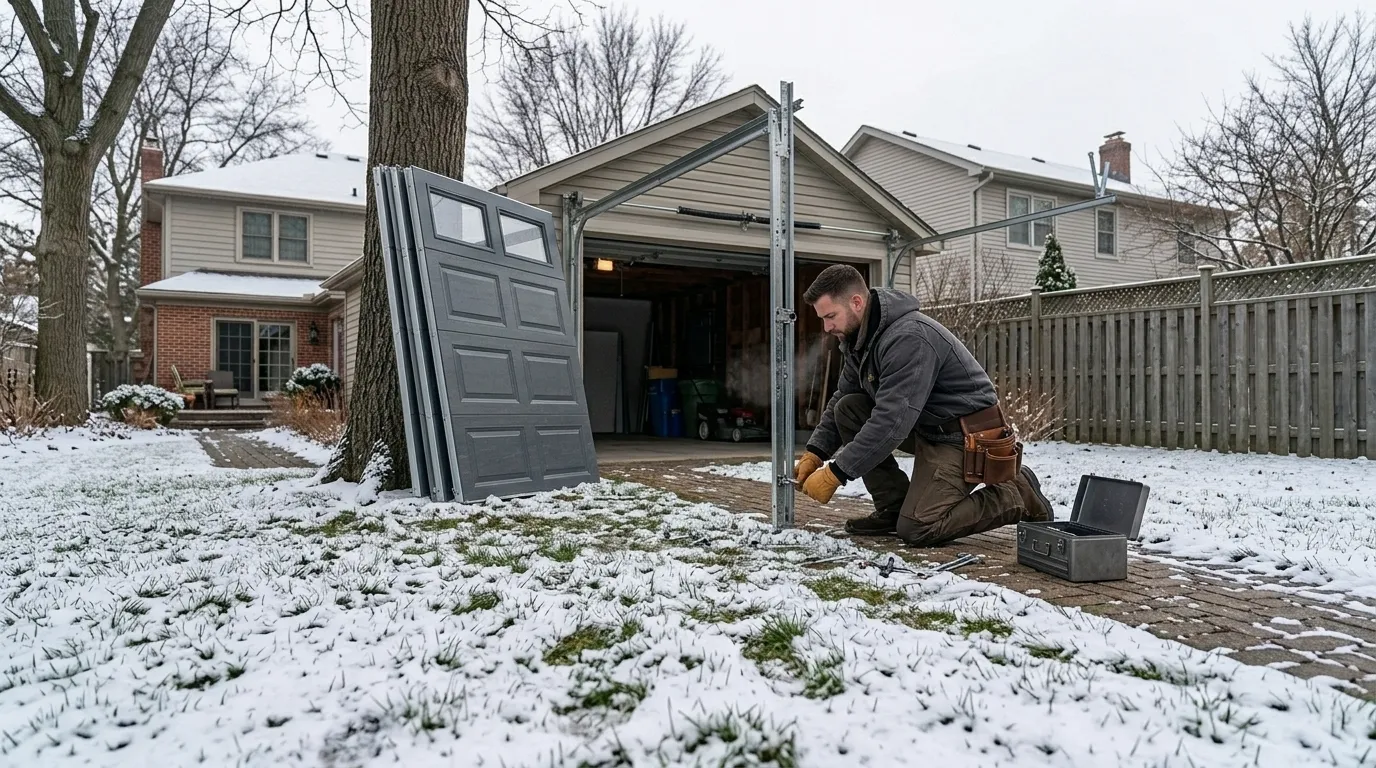
The other driver is the cold, severe climate band Reno sits in. Steel doors and torsion springs both behave differently in hard winter cold than they do in a mild climate, which is why we spec heavier-gauge steel and correctly rated springs rather than whatever's cheapest on the shelf. A door installed to a warm-climate spec sheet will bind and sag here faster than one installed for our actual winters.
Across the roughly 18,039 households and 11,782 owner-occupied houses in this service area, we see the same pattern repeat: older single-layer doors from the original build era, now failing at the same age, on the same track hardware nobody stocks parts for anymore.
How It Shows Up
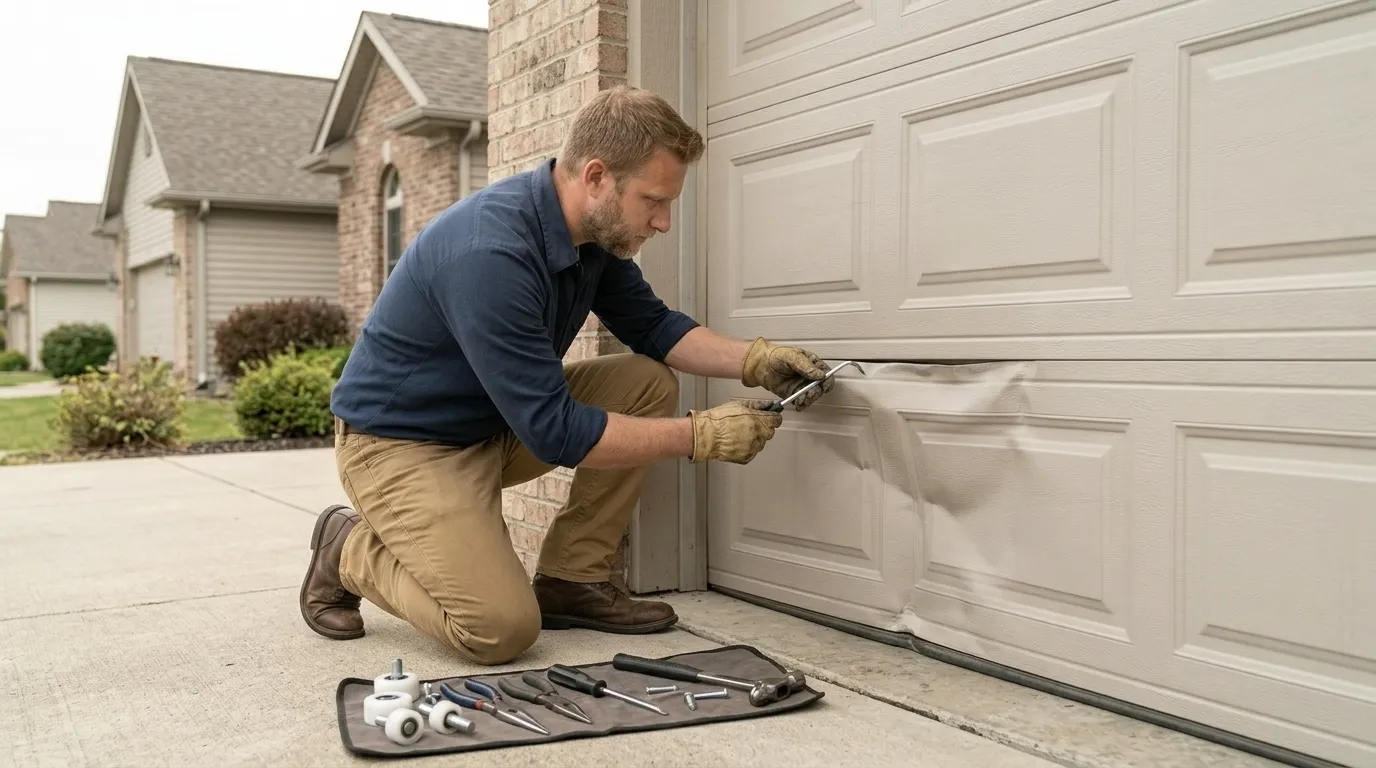
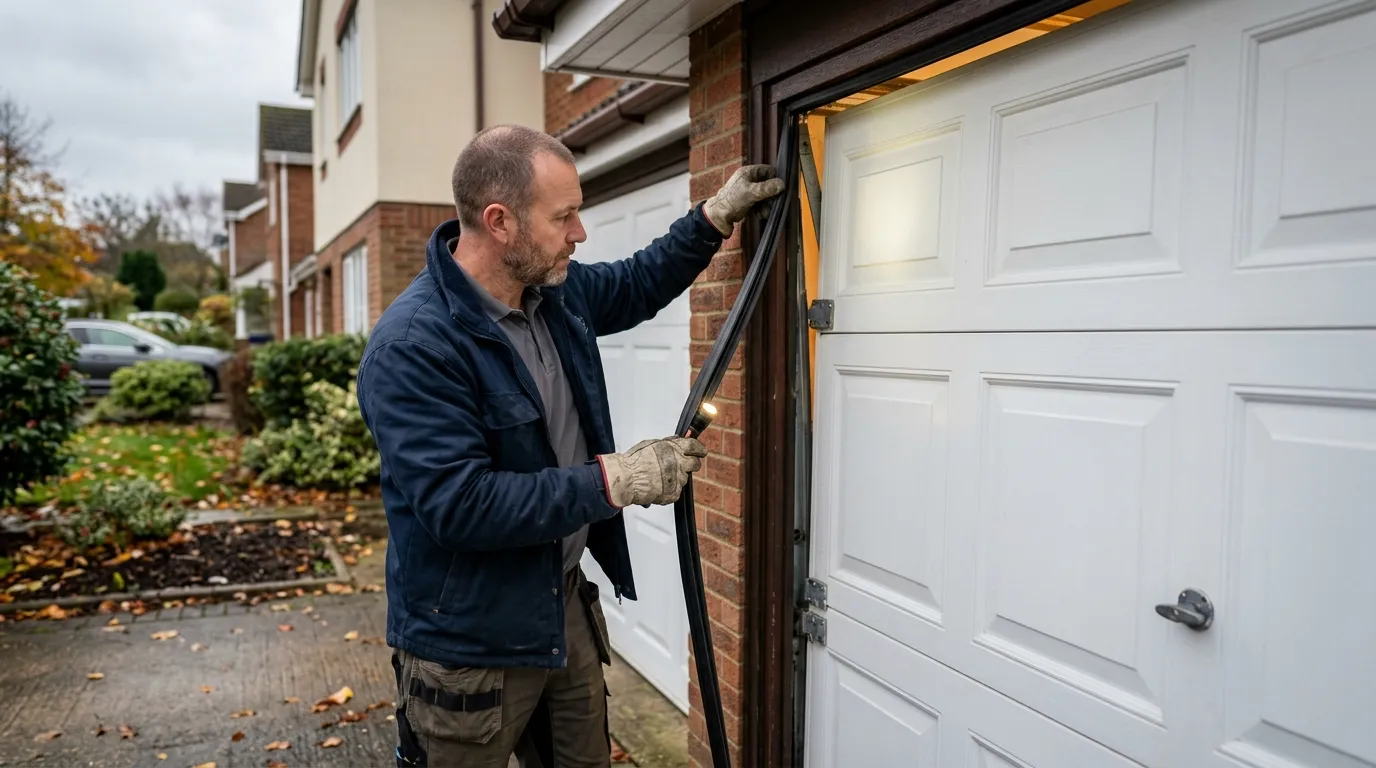
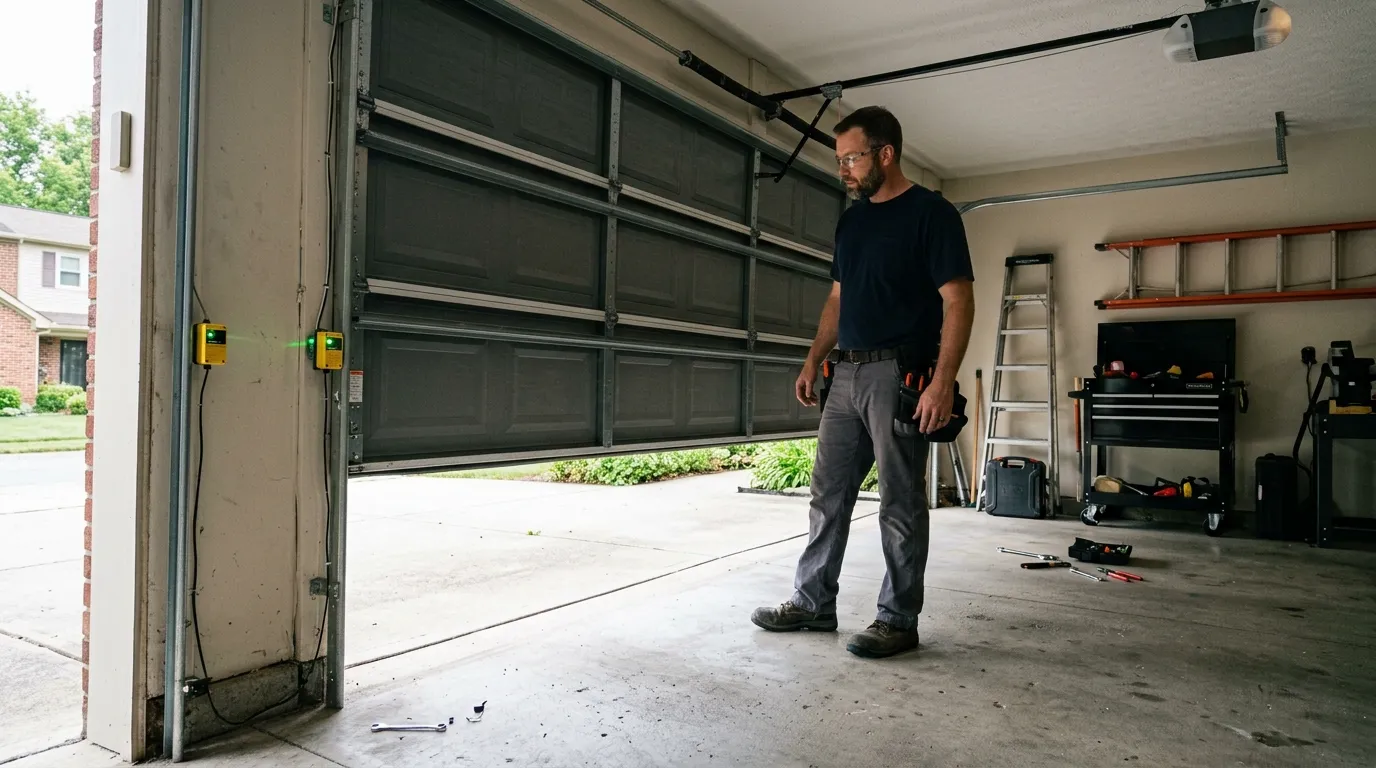
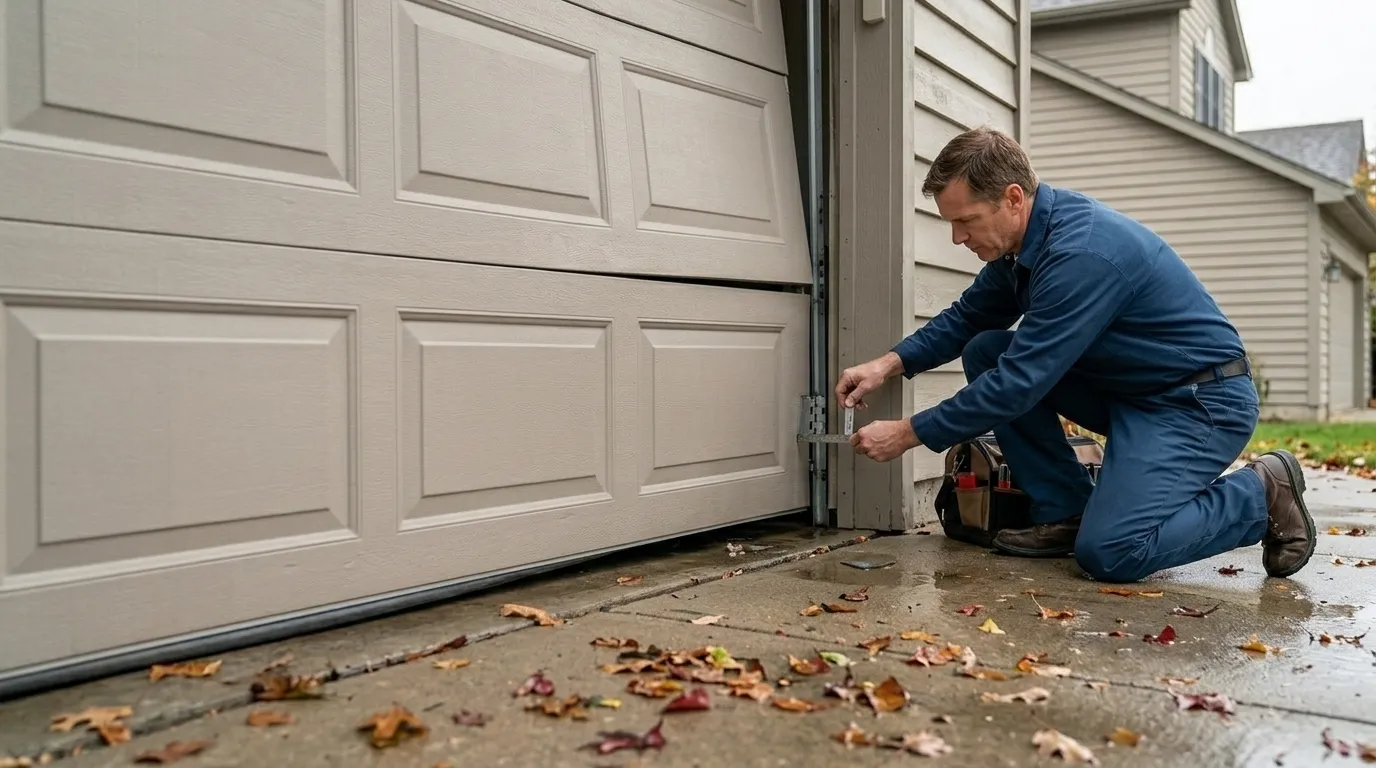
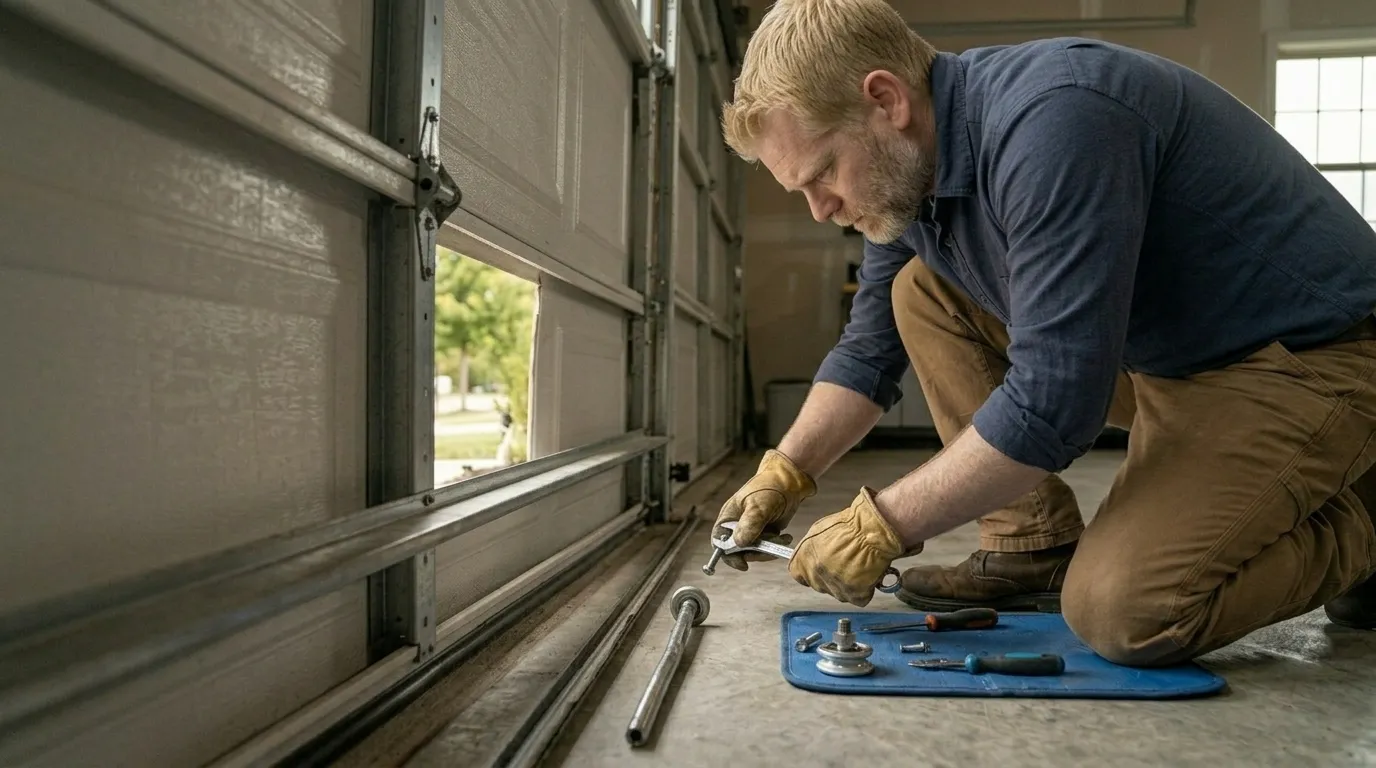
Most installation calls start as a repair call that doesn't make sense to keep repairing. The door binds in the track on cold mornings, the opener strains and reverses partway up, or a panel has warped enough that the seal no longer sits flat against the slab. On the older end of this area's 1938-2003 housing range, we also see doors that were replaced once already, decades ago, on track hardware that's now mismatched to the current door weight.
Sometimes it's simpler than that: a homeowner in one of the areas closer in - West University, Northwest Reno, Northeast Reno - wants to swap a bare single-layer door for an insulated one before another cold winter, not because anything's broken yet. Other times it's a door that's been patched three times already and the labor on patch number four costs more than starting fresh.
We'll tell you straight which one you're looking at. If the track and opener are sound and it's just the door panel that's failed, replacing only the door is usually the right call - a full install isn't always the answer just because it's the one we sell.